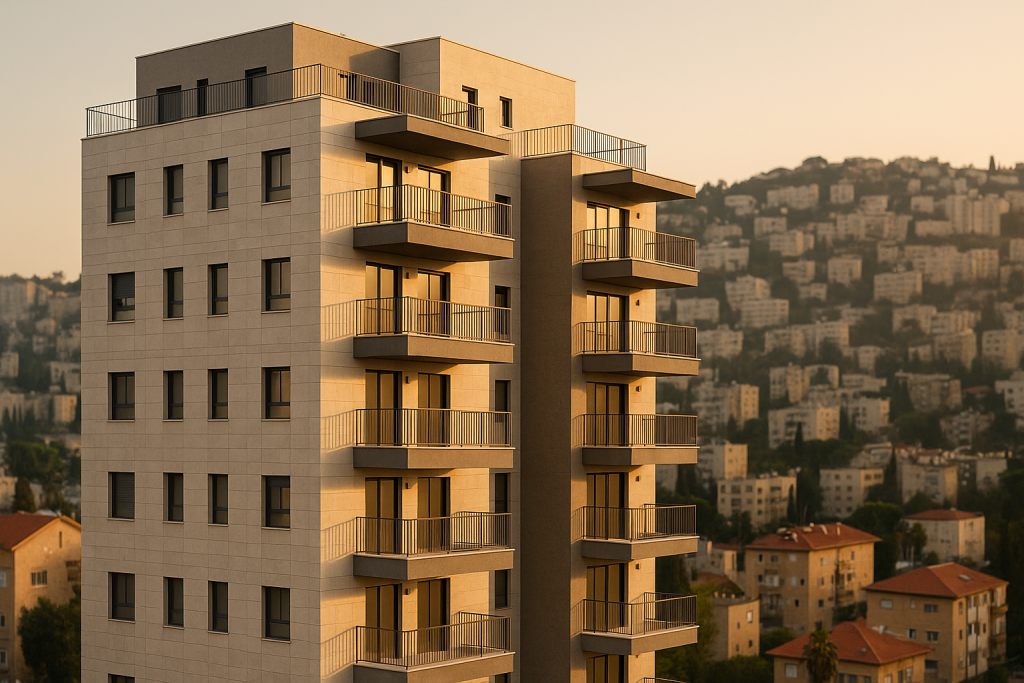
Investment neighborhoods in Haifa in 2026 offer an average gross rental yield of 4.2%-6.5%, entry prices 45% lower than Tel Aviv, and value-growth potential of 30%-50% over the next five years thanks to sweeping urban renewal programs. The recommended neighborhoods for investment are Hadar, Neve Sha’anan, Carmel, Kiryat Yam and Ramat Shaul, each offering a different risk-return profile. At Ahuza real estate we have guided more than 200 investors over the past year, and we know exactly which neighborhoods deliver high yields and which are best avoided.
Table of Contents
- Why Haifa? 5 reasons smart investors choose it
- Investment neighborhoods in Haifa, the top 10 for 2026
- Investment neighborhoods in Haifa, gross yield comparison by neighborhood
- Urban renewal neighborhoods, the big opportunities
- Financing an investment apartment in Haifa
- Real estate investment taxation, what you need to know
- Haifa versus Tel Aviv, Jerusalem and Be’er Sheva, a comparison
- Market-entry strategies, which one suits you
- Neighborhoods to be cautious about
- 7 practical tips for the Haifa real estate investor
- Frequently asked questions
- In summary
Why Haifa? 5 reasons smart investors choose it
Haifa offers the best yield-to-price ratio among Israel’s metropolitan areas in 2026. Entry prices are significantly lower than Tel Aviv, rental yields are above the national average, and sweeping urban renewal programs promise a doubling of value within 5-7 years. Before diving into specific neighborhoods, it helps to understand why investment neighborhoods in Haifa attract so much professional attention.
- Low entry prices: a 3-room apartment in a good neighborhood costs ₪800,000-₪1,200,000. In Tel Aviv? ₪2.6-4 million for a similar apartment. According to the government real estate transactions database (October 2025), the median apartment price in Haifa stands at ₪1.69 million versus ₪3.07 million in Tel Aviv.
- High rental yield: an average of 4.2%-6.5% gross, versus 2.5%-3.5% in Gush Dan. According to quarterly reviews from the Bank of Israel (2025), Haifa leads the metropolitan cities in gross rental yield.
- Urban renewal at an unprecedented pace: the HF/2030 and HF/2666 plans are transforming entire neighborhoods. The Haifa Municipality reports 47 active projects that will add about 12,000 housing units by 2030.
- Steady rental demand: the Technion, University of Haifa, Rambam Hospital, tech companies at MATAM and Sha’ar HaCarmel, over 40,000 students and workers who need apartments every year.
- New infrastructure: the Metronit bus lines are running, the Haifa-Technion cable car is under construction, and a future science park at the Technion campus, all raising property values within a 2-5 km radius.
For a deeper read on the subject, we also recommend our guide on investing in student apartments in Haifa.
Investment neighborhoods in Haifa, the top 10 for 2026
The top 10 neighborhoods for investment in Haifa and the northern metropolis as of April 2026 are: Hadar, Neve Sha’anan, Carmel (Carmelia and Merkaz HaCarmel), Ramat Shaul, Kiryat Yam, Ramot Remez, Sha’ar HaAliya, Denya, Kiryat Eliezer and East Kiryat Haim. Each offers a different risk-return profile. After analyzing hundreds of transactions and rental data from the past year, these are the investment neighborhoods in Haifa that offer the best combination of yield, value-growth potential and low risk.
1. Hadar, the wait is already paying off
Hadar is the number 1 opportunity in Haifa for 2026, the city’s largest urban renewal neighborhood, with value-growth potential of 30%-50% within five years. The neighborhood is undergoing a genuine transformation: 12 approved urban renewal projects in Hadar, Haifa, new businesses and upgraded infrastructure. Entry price for a 3-room apartment: ₪500,000-₪800,000. Current yield: 5.2%-6.1%. Population character: students from the Technion and University of Haifa, young people and professionals in the city center.
2. Neve Sha’anan, stability with a high yield
Neve Sha’anan is Haifa’s “safe” recommendation: an established neighborhood with steady rental demand from students and tech workers, a gross yield of 4.8%-5.5% and relatively low risk. The neighborhood is quiet, close to the Technion and the MATAM technology park, and rental demand stays constant all year round. Price: ₪700,000-₪1,000,000 for a 3-room apartment. Monthly rent: ₪3,200-₪4,500. See our guide to investing in Hadar and Neve Sha’anan for more depth.
3. Carmel (Carmelia and Merkaz HaCarmel), premium with demand
The Carmel is the top tier of Haifa’s real estate market: higher prices but a steady yield of 3.8%-4.5% with minimal risk and constant demand from established families. Carmelia and Merkaz HaCarmel are among the city’s most prestigious neighborhoods: well-kept streets, sea views and access to Carmel Park. Prices: ₪1,200,000-₪1,800,000 for a 3-room apartment. Rent: ₪4,500-₪6,500. Suited to an investor seeking long-term value preservation rather than an aggressive yield.
4. Ramat Shaul, the family neighborhood with potential
Ramat Shaul is the ideal choice for an investor seeking a family neighborhood with a gross yield of 4.3%-5.0% and gradual value growth driven by infrastructure improvements. A green, quiet neighborhood in western Haifa, with good schools, parks and proximity to the beach. Prices: ₪900,000-₪1,400,000 for a 3-room apartment. Rent: ₪3,800-₪5,200. Sustained demand from young families fleeing the center of the country.
5. Kiryat Yam, the northern gateway to metropolitan Haifa
Kiryat Yam offers the best value for money in metropolitan Haifa: apartments priced at ₪550,000-₪900,000 with a high yield of 5.0%-6.0% and direct proximity to the beach. While it is a separate municipality, in market terms it is part of the metropolis: Metronit access to Haifa, a beautiful beach and an active rental market. Prices: ₪550,000-₪900,000. Rent: ₪2,800-₪4,000. An attractive investment for a young investor with limited starting capital.
6. Ramot Remez, the new city
Ramot Remez is Haifa’s new-construction neighborhood: contemporary apartments with a gross yield of 4.0%-4.8% and exponential value-growth potential as the area fills in. A relatively new neighborhood with modern construction, building parking garages and service lobbies. Prices: ₪1,000,000-₪1,500,000. Yield: 4.0%-4.8%. Key advantage: an excellent location, new infrastructure and a young population that increases demand.
7. Sha’ar HaAliya, the big opportunity
Sha’ar HaAliya is the opportunity neighborhood of 2026: low entry prices of ₪450,000-₪750,000 with Evacuation-Construction projects on the way that will double apartment values within 4-5 years. An investor who enters today at ₪600,000 could see the apartment worth ₪900,000+ in 4-5 years. Current yield: 5.5%-6.5%. The risk: the neighborhood is undergoing change, and some areas still require substantial renovation.
8. Denya, quiet and luxury
Denya is Haifa’s luxury neighborhood: constant demand from established families, a steady yield of 3.5%-4.2% with minimal risk. A green neighborhood with views of the sea and the Carmel. Prices: ₪1,300,000-₪2,000,000. Yield: 3.5%-4.2%. Suited to investors seeking value preservation and steady long-term rental, not a speculative purchase.
9. Kiryat Eliezer, excellent value for money
Kiryat Eliezer is the recommendation for balance: a central neighborhood with excellent transport access, a yield of 4.5%-5.3% and reasonable entry prices of ₪650,000-₪950,000. The neighborhood sits in the middle, close to the sea, with Metronit access. Real estate investment in Haifa in this neighborhood offers a great balance.
10. East Kiryat Haim, TAMA 38 done right
East Kiryat Haim offers Haifa’s big TAMA 38 opportunity: a massive reinforcement-and-extension plan with a low entry point of ₪400,000-₪600,000 and doubling potential. The neighborhood is undergoing a massive process of reinforcing and extending buildings. Prices: ₪400,000-₪600,000. Rent: ₪2,500-₪3,400. Risk: the neighborhood is old and parts of it require renewal.
Investment neighborhoods in Haifa, gross yield comparison by neighborhood
The yield table presents all 10 neighborhoods with data on price, rent, gross yield and value-growth potential as of April 2026. Here is a summary of the current figures for the 10 investment neighborhoods in Haifa we reviewed, based on verified transactions at the Central Bureau of Statistics and our own transaction database:
| Neighborhood | 3-room price (₪) | Monthly rent | Gross yield | Value-growth potential |
|---|---|---|---|---|
| Hadar | 500K-800K | 2,800-4,000 | 5.2%-6.1% | Very high |
| Neve Sha’anan | 700K-1M | 3,200-4,500 | 4.8%-5.5% | Medium-high |
| Carmel / Carmelia | 1.2M-1.8M | 4,500-6,500 | 3.8%-4.5% | Medium |
| Ramat Shaul | 900K-1.4M | 3,800-5,200 | 4.3%-5.0% | Medium |
| Kiryat Yam | 550K-900K | 2,800-4,000 | 5.0%-6.0% | Medium-high |
| Ramot Remez | 1M-1.5M | 3,800-5,500 | 4.0%-4.8% | Medium |
| Sha’ar HaAliya | 450K-750K | 2,500-3,500 | 5.5%-6.5% | Very high |
| Denya | 1.3M-2M | 4,200-6,000 | 3.5%-4.2% | Low-medium |
| Kiryat Eliezer | 650K-950K | 3,000-4,200 | 4.5%-5.3% | Medium-high |
| East Kiryat Haim | 400K-600K | 2,500-3,400 | 5.7%-6.8% | High |
“In Haifa, every ₪100,000 of lower entry price translates into 0.5%-0.8% more annual yield, and that is before we even start talking about value growth.”, the Ahuza real estate team
Urban renewal neighborhoods, the big opportunities of 2026
Urban renewal projects in Haifa are the number 1 engine of property value growth in the city in 2026: 47 active projects that will add about 12,000 housing units by 2030. When it comes to investment neighborhoods in Haifa with maximum value-growth potential, we have to talk about urban renewal in Haifa. The HF/2030 and HF/2666 plans cover dozens of neighborhoods and thousands of apartments, creating a window of opportunity that will not return.
What is actually happening, project status April 2026
- Hadar HaCarmel: 12 approved Evacuation-Construction projects. An addition of about 3,000 new housing units. Housing prices rose 18% over the past two years.
- Sha’ar HaAliya: 8 complexes in advanced planning. Apartment prices have already risen 15% over the past year, a sign the market is already pricing in the expectation.
- East Kiryat Haim: a massive urban-renewal plan. A low entry point (400K-600K) with doubling potential within 4-6 years.
- Hillel and Nahalat Shlomo: a new residential project of 800+ housing units in planning. It will completely change the face of the neighborhoods.
- Neve David and Kiryat Eliezer: 5 approved TAMA 38/2 projects in early construction stages.
The guiding rule: buying before a project is approved = maximum profit. An apartment’s price before approval is usually 60%-75% of its price after the plan is completed. According to Ministry of Construction and Housing data, in 2024 Haifa completed 1,247 housing units under urban renewal programs, a decade high. Financing real estate investments is more accessible today than ever.
Financing an investment apartment in Haifa
An investment mortgage in Haifa is available up to 50% of the property value for a second apartment and up to 75% for a first apartment, with a prime-plus spread of 0.5%-1.5% as of April 2026. Understanding the financing structure is critical: the difference between a 50% mortgage and a 75% mortgage completely changes the effective return on your equity.
A typical investor mortgage structure
- Maximum financing rate for a second apartment and above (investor): 50% of the property value, per Bank of Israel rules.
- Financing rate for a first apartment (even if for investment): up to 75%.
- Repayment period: up to 30 years, commonly 20-25 years for investors.
- Average interest rate, April 2026: prime + 0.5%-1.5% on a variable track, 4.8%-5.6% on a fixed index-linked track.
- Minimum equity for a ₪700,000 apartment: ₪350,000 (for a second apartment) or ₪175,000 (for a first apartment).
Equity, additional costs and cash flow
Beyond the initial equity, it is important to plan for ancillary costs: purchase tax (7%-10% for an investor), legal fees (0.5%-1%), brokerage commission (1%-2%) and an initial renovation (₪15,000-₪50,000 depending on the apartment’s condition). Your monthly cash flow should be positive, the rent should cover the mortgage repayment, building fees, insurance, municipal tax and maintenance.
Real estate investment taxation, what you need to know
The purchase tax for an investor buying a second apartment in 2026 stands at 8% up to ₪6 million and 10% above that amount, with no “first apartment” relief. Proper tax planning can save tens of thousands of shekels in a single deal. All figures in this section are based on Israel Tax Authority publications as of January 2026; it is important to verify their current status with a certified tax adviser before a transaction.
The three tax equations every investor must understand
- Purchase tax on a first apartment: 0% up to ₪1,978,745, then brackets of 3.5%-10% above. A significant saving for those buying their first apartment.
- Purchase tax on an additional apartment (investor): 8% up to ₪6 million, 10% above. The difference from a first apartment is dramatic.
- Betterment tax (capital gains) on sale: 25% on the real profit, with exemptions for a single residential apartment under certain conditions.
For more information, see our guide to purchase tax and betterment tax in Haifa real estate.
Haifa versus Tel Aviv, Jerusalem and Be’er Sheva, a comparison
Haifa leads Israel’s metropolitan areas in yield-to-price ratio: an average gross yield of 4.8% versus 2.9% in Tel Aviv, 3.4% in Jerusalem and 5.2% in Be’er Sheva. This comparison explains why Haifa has become the favorite of smart investors, it offers the best balance between current yield, capital potential and market stability.
| City | Median 3-room price | Average gross yield | 5-year value-growth potential |
|---|---|---|---|
| Haifa | ₪1.69M | 4.8% | 25%-40% |
| Tel Aviv | ₪3.07M | 2.9% | 10%-20% |
| Jerusalem | ₪2.45M | 3.4% | 15%-25% |
| Be’er Sheva | ₪1.18M | 5.2% | 20%-30% |
The conclusion: Haifa is the optimal choice for anyone seeking a combination of high yield, low-to-medium risk and significant value-growth potential. Be’er Sheva offers a high yield but with higher risk. Tel Aviv offers stability but a low yield. The figures in the table are based on CBS reports for the fourth quarter of 2025 and our own transaction database.
Market-entry strategies, which one suits you
Three main investment strategies suit real estate investors in Haifa in 2026: current-yield investing, value-add investing, and speculative urban renewal investing, each requiring different capital, time horizon and risk profile. Choosing the right strategy for you depends on your financial goal, your available time and your risk tolerance.
Strategy 1, current yield (cash flow)
You buy an apartment in good condition, rent it out immediately and receive steady monthly cash flow. Suited to an investor seeking regular income and less involvement. Suitable neighborhoods: Neve Sha’anan, Kiryat Eliezer, Ramat Shaul. Time horizon: 7-10 years.
Strategy 2, value add
You buy an apartment in fair-to-poor condition, renovate it for ₪50,000-₪150,000, and rent it out at a higher price or sell it at a profit. Suited to an active investor with time and access to reliable contractors. Suitable neighborhoods: Hadar, Kiryat Haim, Sha’ar HaAliya. Time horizon: 1-3 years.
Strategy 3, speculation on urban renewal
You buy an old apartment in a complex set to undergo Evacuation-Construction or building renewal. You receive a new, larger apartment when the project is completed. Suited to investors with patience and tolerance for uncertainty. Suitable neighborhoods: Hadar, Sha’ar HaAliya, East Kiryat Haim. Time horizon: 4-7 years.
Neighborhoods to be cautious about, where not to invest
Not every neighborhood in Haifa is a good investment: certain areas suffer from aging infrastructure, weak rental demand or no renewal prospect in the near term, and it is best to avoid them or invest only with deep local expertise. It is important to say this honestly, even if the low prices look tempting. Here are areas that require caution:
- Kiryat Shmuel (older parts): prices are low for a reason. Old infrastructure, a slow renewal pace, low rental demand. Theoretical gross yield of 5%, but long vacancy periods bring it down in practice to 3.5%-4%.
- Halisa: despite tempting entry prices (300K-500K), the rental market is weak and value-growth potential is limited. There is currently no approved renewal plan for the area.
- Old industrial zones: environmental issues, odors, minimal residential rental demand.
- Public housing blocks with no active committee: a dysfunctional building committee means general neglect and falling value. Check the budget and management before buying.
7 practical tips for the Haifa real estate investor
These seven tips sum up the most important lessons from the hundreds of transactions we have guided in Haifa, and they are the gap between an investor who profits and one who errs. Before investing in an apartment in investment neighborhoods in Haifa, it is important to know:
- Run full due diligence: the property’s legal status, purchase tax, betterment tax, debts, building committee, and registration at the Land Registry and Israel Land Authority.
- Consider student rentals: a higher yield (5%-7%), but with high turnover and higher maintenance costs. Suited to Hadar, Neve Sha’anan and Ramot.
- Check urban plans before buying: visit the website of the Haifa Municipality local planning and building committee and check approved plans in your property’s area.
- Do not skimp on renovation: a renovated apartment in Hadar yields 20%-30% more rent than the same unrenovated apartment. ROI on a ₪60,000 renovation: 2-3 years.
- Prefer proximity to transport: Metronit, Carmelit, train stations. Every 200 meters closer = 5%-10% extra rent.
- Buy through a local real estate agent: an agent who knows the Haifa market in depth knows where the real opportunities are and where the traps lie.
- Plan for the long term: ROI in Haifa real estate starts to be felt after 3-5 years. Do not enter with too short a horizon.
Frequently asked questions
What is the average yield on a real estate investment in Haifa?
The average rental yield in Haifa stands at 4.2%-5.8% gross, depending on the neighborhood. Peripheral neighborhoods such as Hadar and Sha’ar HaAliya offer higher yields (5.5%-6.5%), while luxury neighborhoods such as Denya and the Carmel offer lower yields (3.5%-4.5%) but with high stability.
What is the minimum amount for investing in an apartment in Haifa?
You can enter the market from ₪450,000-₪500,000 in neighborhoods such as Sha’ar HaAliya and Hadar. With equity of 50% (for a second apartment) or 25% (for a first apartment) plus a mortgage, the required equity ranges from ₪110,000 to ₪250,000.
Which neighborhoods in Haifa are undergoing urban renewal?
The main neighborhoods undergoing urban renewal in Haifa are: Hadar HaCarmel, Sha’ar HaAliya, East Kiryat Haim, Hillel, Neve David and Kiryat Eliezer (partially). The HF/2030 and HF/2666 plans cover dozens more neighborhoods.
Is it worth buying an apartment in Haifa for investment in 2026?
Yes, provided you choose the right neighborhood and understand the market. Haifa offers high value for money and some of the highest rental yields among the country’s large cities, 4.8% on average versus 2.9% in Tel Aviv. The urban renewal opportunities add significant value-growth potential.
Which is better, a new or a second-hand apartment in Haifa?
It depends on the goal. A new apartment: less maintenance, a high building standard, good value preservation but a high entry price and a relatively low yield (3.5%-4.5%). Second-hand: a low entry price, room for renovation and value-add, a higher yield (4.5%-6.5%) but requiring time and active management.
What are the holding costs of an investment apartment in Haifa?
Annual holding costs: municipal tax (₪1,800-₪3,500 for a 3-room apartment), building committee fees (₪1,200-₪3,000), building and contents insurance (₪600-₪1,200), routine maintenance (about 1% of the property value per year). Total average annual costs: ₪6,000-₪12,000.
What mortgage percentage can I get for an investment apartment in Haifa?
For a second apartment and above (investor) you can get up to 50% of the property value. For a first apartment (even if for investment) you can get up to 75%. The average interest rate in April 2026 ranges from 4.5% to 5.8% depending on the track and the bank.
How long does it take to rent out an apartment in Haifa?
In sought-after neighborhoods such as Neve Sha’anan and the Carmel, a renovated apartment is occupied within 7-21 days. In less sought-after neighborhoods (Kiryat Shmuel, Halisa) the wait can reach 30-60 days. We recommend budgeting 1-2 months of rent per year for vacancy periods.
Does investing in Kiryat Yam count as investing in Haifa?
Kiryat Yam is a separate municipality, but in market terms it is part of metropolitan Haifa: direct Metronit access, the same rental market, the same investors. Investments in Kiryat Yam offer high yields (5%-6%) at low entry prices, an excellent opportunity for a young investor.
What is the difference between purchase tax for a first apartment and for an investor?
For a first apartment: 0% up to ₪1,978,745, then brackets of 3.5%-10%. For an investor (second apartment and above): 8% from the first shekel up to ₪6 million, 10% above. For a ₪1.5 million apartment, the difference is a ₪120,000 saving for a first apartment.
How long does it take to see a meaningful return from investing in Haifa?
Current yield (rent) begins from the first month after occupancy. A meaningful return from value growth starts to appear after 3-5 years in stable neighborhoods, and after 4-7 years in urban renewal neighborhoods. A cumulative ROI of 50%-100% within a decade is realistic in the right location.
How do I find the right real estate agent in Haifa?
Look for an agent with a valid license from the Ministry of Justice, 5+ years of experience in the Haifa market, expertise in the specific neighborhood that interests you, and availability for neighborhood tours and investment analysis. Ask for 2-3 references from previous clients before choosing.
In summary
Haifa in 2026 is the clearest opportunity in the Israeli real estate market: a rare combination of high rental yield, reasonable entry prices and significant value-growth potential thanks to sweeping urban renewal. Investment neighborhoods in Haifa such as Hadar, Neve Sha’anan, Carmel, Kiryat Yam and Ramat Shaul offer a different risk-return profile for every type of investor. The success of the investment depends on choosing the right neighborhood for your goal, understanding the financing and tax structure, and having professional guidance that knows the local market in depth.
Ready to find the right investment for you?
The Ahuza real estate team will guide you from the very first step: personal investment analysis, neighborhood tours, a review of building rights and renewal potential, and legal support all the way to signing.