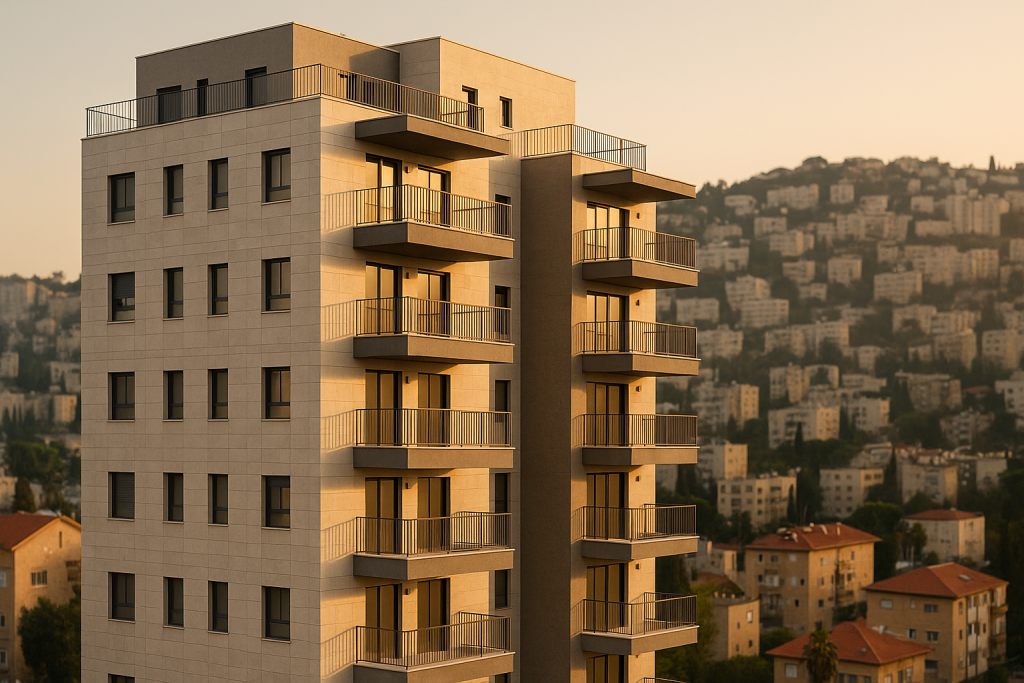
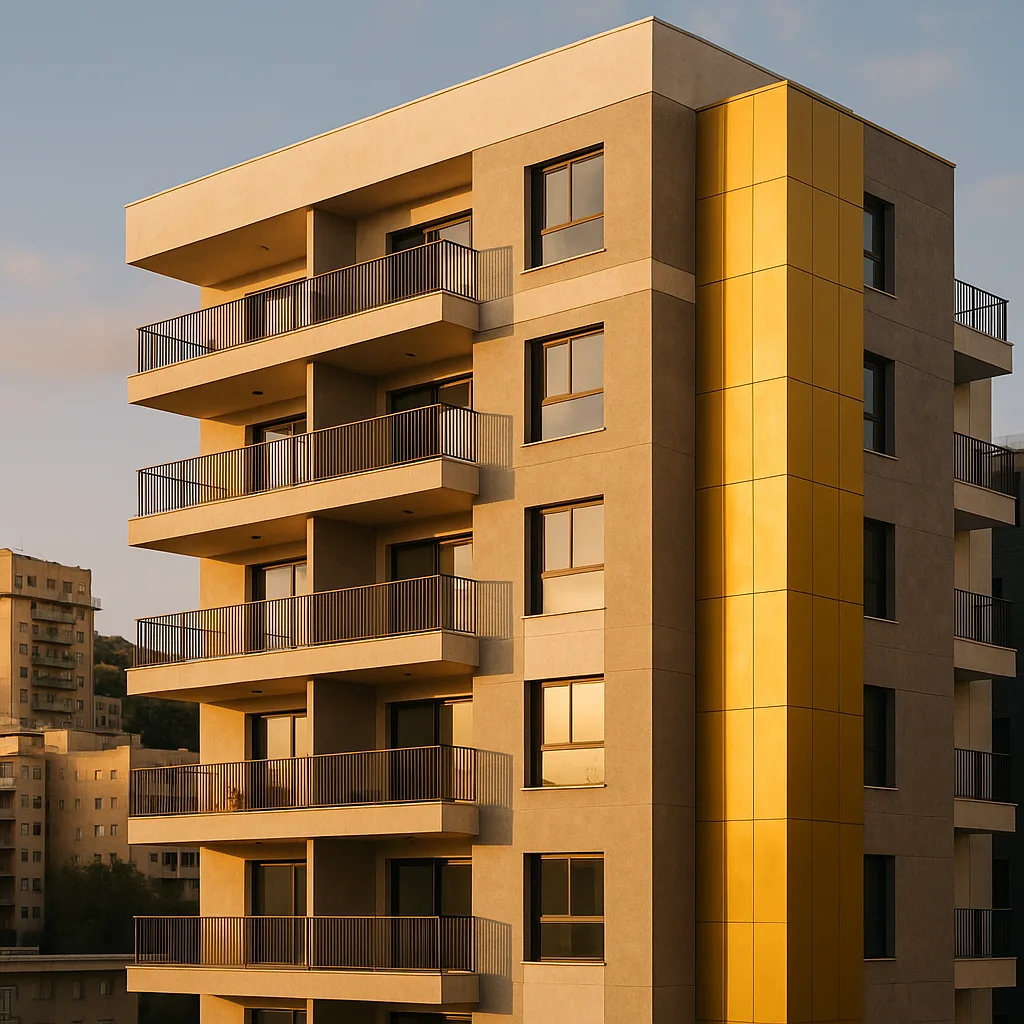
Urban renewal in the Krayot has become a major growth engine in northern Israel in recent years, and the Krayot sit at the heart of the process.
The Krayot are in the midst of a period that is reshaping the area. Veteran neighborhoods in Kiryat Yam, Kiryat Motzkin, Kiryat Bialik and Kiryat Ata, most of them built in the 1950s and 1960s, are undergoing an accelerated process of clearing old buildings and constructing new complexes. For apartment owners this means upgrading the family’s main asset, and for investors it means entering the market before prices catch up with demand.
For a broad view of the entire metropolitan area, it is worth reading our guide to urban renewal in Haifa, while here we focus on what is happening in the Krayot themselves.
Table of Contents
- 1. Why the Krayot became a renewal hub
- 2. The tracks: the Shaked Alternative vs. area Pinui-Binui
- 3. What is happening in each of the Krayot
- 4. What to check before joining
- 5. Frequently asked questions
Why the Krayot Became an Urban Renewal Hub
The Krayot offer a rare combination: available land, old buildings ripe for renewal, and proximity to employment centers in Haifa Bay. The Israel Land Authority and the local planning committees have marked dozens of complexes for renewal, some already at advanced planning stages. Demand for new apartments in the area has risen considerably in recent years, a trend that draws large developers to complexes once considered less attractive. For a longtime resident, the result is a new, protected apartment in place of a sixty-year-old building with no elevator.
The Tracks in 2026: The Shaked Alternative vs. Area Pinui-Binui
It is important to understand that the original TAMA 38 model ended at the close of 2023 and is rarely approved anymore. Two main tracks operate today. The first is the Shaked Alternative, also known as building renewal, suited to a single building or several adjacent buildings and allowing a significant addition of rights through a detailed plan of the local committee. The second is area renewal, that is Evacuation-Construction (Pinui-Binui), intended for a broad complex of several buildings, usually at least twenty-four units, and allowing the replanning of an entire neighborhood including roads, gardens and public buildings. In the Krayot both tracks operate side by side, and the choice between them depends on the size of the complex and the state of the land.
What Is Happening in Each of the Krayot
Kiryat Yam leads the pace, with complexes near the beach that attract lively development and high yield potential. Kiryat Motzkin shows steady demand from families, and its veteran neighborhoods suit both the Shaked Alternative and Pinui-Binui. Kiryat Bialik keeps a green, quiet character, which makes projects there attractive to homeowners looking to upgrade. Kiryat Ata, the largest of the Krayot, offers a wide range of complexes at different planning stages and relatively affordable entry prices. In each of them the state of the plans differs, so a specific review of the particular complex is essential before making a decision.
What to Check Before Joining a Project
Before signing, it is worth checking the developer’s track record and the projects already completed, the scope of the bank financing and guarantees, and the status of the plan at the local committee. The level of agreement among residents is a decisive factor for the timeline, and it is advisable to have the process guided by a lawyer who specializes in urban renewal and by a real estate appraiser acting on the residents’ behalf. An orderly review at the early stage saves costly disputes down the road.
Considering a renewal project in the Krayot?
The Ahuza team guides residents and investors across the Krayot through every stage of the process, from the feasibility check to handing over the key.
Frequently Asked Questions
Which Kirya leads in urban renewal?
What is the difference between the Shaked Alternative and Pinui-Binui?
How long does an urban renewal process in the Krayot take?
Last updated: June 2026