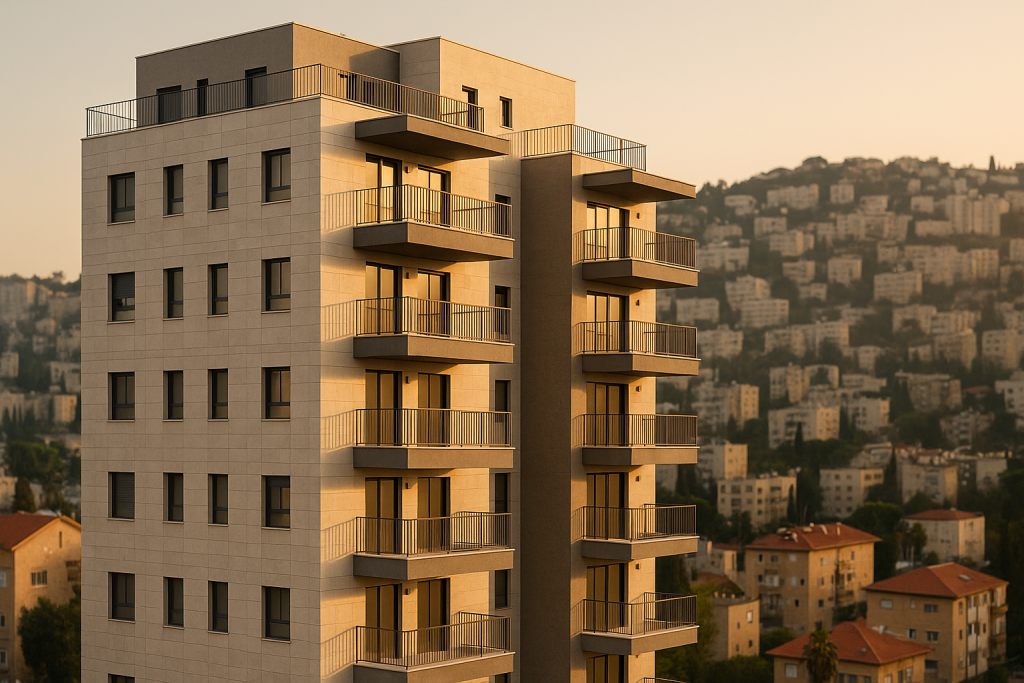
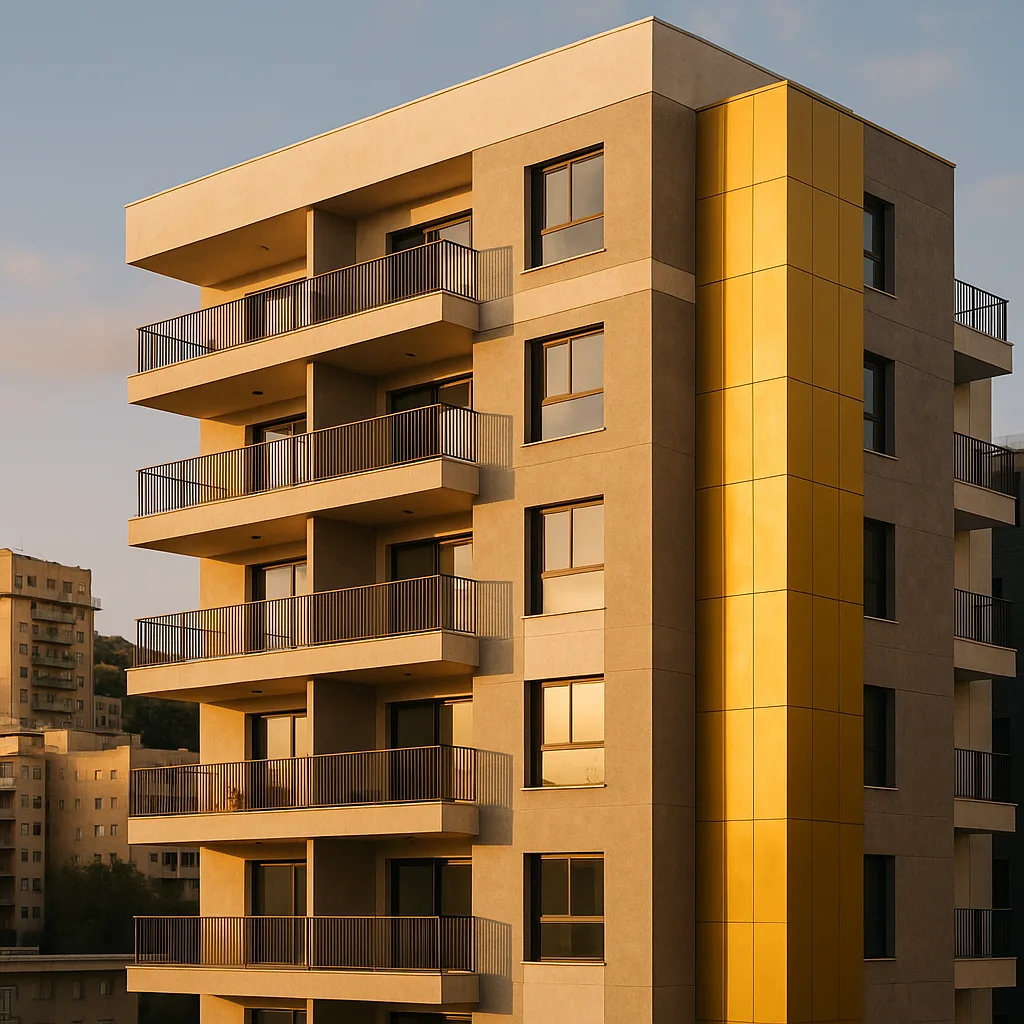
Urban Renewal in Haifa 2026: Active Projects and a Practical Guide
Table of Contents
- Urban renewal in Haifa, what it is and why it matters
- Which projects are active in Haifa in 2026?
- What are apartment owners’ rights in Pinui-Binui?
- Building renewal vs. Pinui-Binui in Haifa
- Comparison table: building renewal vs. Pinui-Binui
- Process and timeline for Haifa residents
- Urban renewal in Haifa as a real estate investment
- Urban renewal in the Krayot, geographic expansion
- How to start the process?
- Frequently asked questions
Urban renewal in Haifa, what it is and why it matters
Urban renewal in Haifa is a planning and economic process aimed at upgrading old neighborhoods, replacing deteriorating buildings with new ones, and increasing housing density on existing land. Contrary to a common misconception, it is not only about demolition and construction, it is about creating new communities, improving infrastructure, adding public and green spaces, and preserving neighborhood identity alongside modernization. In Haifa, urban renewal is a strategic tool for bringing residents back to the city, whose population fell from a peak of 280,000 in the 1980s to around 190,000 in 2010.
There are many reasons urban renewal matters in Haifa. First, the old buildings in central neighborhoods such as Hadar, the Carmel, and Yarkon suffer from outdated infrastructure, structural safety issues, and a lack of economic justification for repair. Second, apartment owners in these buildings see Pinui-Binui as an opportunity to receive a new, modern apartment with a higher value. Third, the municipality wants to grow its resident base and thereby increase tax revenues and state support.
Renewal programs in Haifa fall into two main categories: Pinui-Binui (Evacuation-Construction), in which apartment owners receive a new apartment within the project or an alternative, and building renewal under the Shaked Alternative track, in which a single building is demolished and rebuilt, or reinforced, under a detailed plan. Both paths offer different opportunities for property owners and investors.
Which projects are active in Haifa in 2026?
More than 40 urban renewal projects are currently active in Haifa at various stages of approval, construction, and completion. The main projects include the Hadar compound (Pinui-Binui of buildings from the 1950s), the Carmel neighborhood (building renewal plans adding 600+ housing units), and projects in the Yarkon and Givat Ze’ev neighborhoods.
The leading projects in 2026 include:
- The central Hadar compound: a massive Pinui-Binui project of roughly 400 housing units in the Hadar neighborhood, with a plan to upgrade streets and public spaces. Apartment owners receive a new apartment of similar or larger size, and in return the developers receive building rights to add floors.
- Carmel, building renewal: plans to renew buildings in the Carmel neighborhood by adding floors and housing units. The project is expected to add roughly 600 new housing units.
- South Yarkon: a Pinui-Binui project in the Yarkon neighborhood with a strategic location close to Haifa Port and the commercial district.
- Givat Ze’ev: a compound plan adding floors and housing units to existing buildings.
Each of these projects is at a different stage: some are in the detailed-plan approval phase, some are at the start of construction, and some are already nearing completion. Ahuza Real Estate tracks these developments closely and offers professional guidance to property owners in these neighborhoods.
| Type of renewal | Pinui-Binui | Building renewal (Shaked Alternative) |
|---|---|---|
| Apartment owners’ rights | New apartment of similar or larger size | New apartment in a renewed or rebuilt building |
| Apartment owners’ costs | Fully covered by the developer | Usually financed by the developer out of building rights |
| Project duration | Typically 5-7 years | Relatively short, about 3 to 5 years |
Comparison of urban renewal types in Haifa
What are apartment owners’ rights in Pinui-Binui?
Apartment owners in Pinui-Binui projects in Haifa are entitled to protected legal rights: a new apartment of similar or larger size, demolition and construction costs covered by the developer, compensation for every year of construction delay, and the right to remain in the old apartment until the new one is completed.
The detailed rights of apartment owners in Pinui-Binui:
- A new apartment: no smaller than the original, with modern technical standards and infrastructure.
- Construction costs covered: the developer bears all demolition, construction, infrastructure, and engineering costs.
- Delay compensation: if construction takes longer than planned, apartment owners receive financial compensation (usually 1-2% of the apartment’s value per year).
- Staying in the old apartment: until the new apartment is completed, owners can remain in their old apartment without paying rent to the developer.
- Parking and retail rights: owners are usually also entitled to parking in the new building and a share of the purchase rights in ground-floor shops.
These rights are protected by law and by the Pinui-Binui agreement, but the details vary from project to project. Ahuza Real Estate recommends that apartment owners consult a lawyer who specializes in the field before signing any agreement.
The two urban renewal tracks in Haifa in 2026: building renewal vs. Pinui-Binui
In Haifa in 2026 there are two main urban renewal tracks: building renewal (the Shaked Alternative) for a single building, and Pinui-Binui (comprehensive renewal) for a compound of several buildings together. It is worth clarifying a point that confuses many residents: the original TAMA 38 program ended in October 2023 and is no longer approved as a new track. It has been replaced by the tracks now regulated through detailed plans before the local committee, so the relevant comparison for apartment owners in Haifa is between building renewal and Pinui-Binui, and not between “38/1 and 38/2” as was customary in the past.
Building renewal (the Shaked Alternative), who is it right for?
Building renewal suits a single building, or a small number of adjacent buildings, that advance a detailed plan before Haifa’s local committee. On this track, the old building is demolished and rebuilt, or floors are added and building rights are converted into new apartments. The scope of building rights on this track often reaches up to about 400% of the existing situation, depending on the local plan and municipal policy. The main advantage for Haifa residents: the process is faster than Pinui-Binui, because it involves a single building and a limited number of apartment owners who need to reach agreement.
Pinui-Binui (comprehensive renewal), when is it the solution?
Pinui-Binui is a comprehensive renewal track intended for an entire compound of several buildings, usually starting from 24 housing units and up. Residents vacate the old buildings, which are demolished, and a completely new compound is built in their place with modern residential buildings, public spaces, and new infrastructure. The process takes longer, but apartment owners receive a new, larger apartment at no construction cost to them, as the developer finances the project out of the additional building rights. In dense Haifa neighborhoods such as Hadar and parts of Neve Sha’anan, this is usually the worthwhile track, because it allows a wide compound to be replanned.
How do you choose between the tracks?
The choice is determined mainly by the size of the compound and the number of buildings: a single building with residents who want a fast process will turn to building renewal, while a compound of several neighboring buildings will be routed to Pinui-Binui. Beyond that, the condition of the land, existing building rights, the policy of Haifa’s local committee, and the level of agreement among residents all play a role. Before committing to an agreement with a developer, it is worth checking the detailed plan that applies to the plot and obtaining a professional estimate of the expected scope of rights, so you know in advance the value of the new apartment you will receive.
Building renewal vs. Pinui-Binui: a comparison table for Haifa residents
Before deciding, it is worth seeing the two tracks side by side. The figures in the table are typical ranges for projects in Haifa, and they vary from compound to compound according to the detailed plan.
| Parameter | Building renewal (Shaked Alternative) | Pinui-Binui (comprehensive renewal) |
|---|---|---|
| Project scope | A single building or a small number of buildings | A compound of several buildings, usually 24 units and up |
| What happens to the existing apartment | The building is demolished and rebuilt, or reinforced and extended | The buildings are demolished and a completely new compound is built |
| Cost participation | On the demolish-and-rebuild track the developer finances; in reinforcement there may be partial participation | The developer finances out of the additional building rights |
| Estimated process duration | Relatively short, about 3 to 5 years | Longer, up to 5 to 8 years and more |
| Who it suits in Haifa | A single building with coordinated residents, a single street or plot | Dense compounds such as parts of Hadar and Neve Sha’anan |
Process and timeline: what Haifa residents can expect at each stage
An urban renewal process in Haifa usually takes between four and eight years, from the residents’ first organization to occupancy of the new building. Understanding the stages of the process helps residents manage expectations correctly and identify the points where it is important to pause and seek advice.
Stage 1: Resident organization and choosing a representative committee
The residents organize, choose a representative committee, and appoint a lawyer to accompany them on the residents’ behalf. This is the most important stage, because the lawyer protects the residents’ rights against the developer, and their fee is financed by the developer as required by law.
Stage 2: Planning, permits, and signing an agreement
The developer advances a detailed plan before Haifa’s local committee, obtains building permits, and signs an agreement with the residents that anchors the compensation and guarantees. This stage tends to be the longest, and it may last several years until a final building permit is obtained.
Stage 3: Construction, occupancy, and handover of apartments
Once the permit is obtained, actual construction begins. In Pinui-Binui, residents live elsewhere temporarily and receive rent coverage from the developer, and when construction is complete they receive a new apartment in a modern building. Throughout all stages, Haifa residents should rely on experienced professionals to ensure that their rights are preserved and that timelines are met.
Urban renewal in Haifa as a real estate investment
Investing in properties in Haifa’s renewal neighborhoods can be highly profitable, but it requires a deep understanding of the projects, timelines, and risks. Apartment owners in Pinui-Binui and building renewal projects on the Carmel have seen an average increase of 40-60% in their property value within 5-7 years.
Why urban renewal in Haifa is an investment opportunity:
- Rising property value: new apartments in renewing neighborhoods sell at a premium of 20-30% compared with old apartments of the same size.
- High demand: new apartments in Haifa are in strong demand from new residents, young families, and investors.
- Government support: urban renewal in Haifa receives support from the state and Haifa Municipality, which lends stability to projects.
- Long-term potential: Haifa went through a period of demographic decline, but it is now in a process of economic and social recovery.
However, investing in urban renewal requires caution:
- Choosing the right project: not every renewal project is safe. You must check the developer, the timeline, and the detailed plan.
- Understanding the risks: construction delays, additional costs, and a drop in demand are possible risks.
- Professional advice: Ahuza Real Estate specializes in evaluating renewal projects in Haifa and can help select a project that fits the investor’s risk profile and budget.
Urban renewal in the Krayot, geographic expansion
In addition to Haifa, urban renewal is also active in the Krayot towns (Kiryat Ata, Kiryat Haim, Kiryat Motzkin). The Krayot have around 15 active renewal projects, some at advanced construction stages.
In the Krayot, urban renewal focuses mainly on building renewal and smaller Pinui-Binui projects than in Haifa. The projects in the Krayot:
- Kiryat Ata: several compound projects in central neighborhoods, with an emphasis on infrastructure upgrades.
- Kiryat Haim: renewal projects in old neighborhoods, adding floors and building rights.
- Kiryat Motzkin: smaller projects, but with great potential due to proximity to Haifa Port and the industrial zone.
The difference between renewal in Haifa and in the Krayot is one of scale: in Haifa the projects are larger and there is more support from Haifa Municipality. In the Krayot the projects are smaller, but with lower risk thanks to steady demand from local residents.
How to start the process?
If you own an apartment in a renewal neighborhood in Haifa or the Krayot, or if you are interested in investing in a renewal project, the first step is to understand your project and your rights.
Steps to get started:
- Identify the project: check whether your apartment, or the property you are interested in, lies within a renewal project. You can do this through the Haifa Municipality website or through planning offices.
- Read the detailed plan: every renewal project must have a detailed plan approved by Haifa Municipality. This plan sets out all the rights and obligations of apartment owners.
- Consult a lawyer: before signing a Pinui-Binui agreement or joining a compound plan, consult a lawyer who specializes in the field.
- Check the developer: review the developer’s track record, previous projects, and feedback from apartment owners who took part in them.
- Get real estate advice: Ahuza Real Estate offers professional guidance to property owners in renewal neighborhoods, including project evaluation, agreement review, and financial planning.
If you are a new investor looking to invest in a renewal project, things are a little different:
- Choose a project at an advanced stage: to reduce risk, choose a project that is already at advanced construction stages, not one that is only in the approval phase.
- Compare prices: compare new apartments in renewal projects with apartments on the regular market. Apartments in renewal projects are usually more expensive, but they are new and hold higher value in the long term.
- Check demand: check whether there is strong demand for apartments in the project. If so, it is a good sign for the property’s future value.
The facts in numbers
- 40+ projects: more than 40 urban renewal projects are active in Haifa at various stages of approval and construction (Haifa Municipality)
- 8,000 housing units: expected to add roughly 8,000 new housing units in Haifa over the next five years (Haifa 2030 Development Plan)
- 40-60% increase: apartment owners in Pinui-Binui and building renewal projects on the Carmel saw an average increase of 40-60% in their property value within 5-7 years (Haifa Real Estate Market Study 2024)
Further sources:
- Haifa Municipality, information on urban renewal
- Central Bureau of Statistics, demographic data on Haifa
Frequently asked questions
Urban renewal in the surrounding towns
Beyond Haifa itself, renewal processes are active throughout the bay area. For the local guides by town:
- ײ Urban renewal in the Krayot, Kiryat Yam, Motzkin, Bialik, and Ata
- ײ Urban renewal in Nesher, projects and residents’ rights
- ײ Urban renewal in Tirat Carmel, the coastal advantage
What is the difference between Pinui-Binui and building renewal (the Shaked Alternative)?
In Pinui-Binui, the developer bears the cost of the entire project and apartment owners receive a new apartment at no cost. In building renewal (the Shaked Alternative), the process applies to a single building or a small number of buildings, it is faster, and building rights often reach up to about 400% of the existing situation.
How long does an urban renewal project in Haifa take?
Usually, a Pinui-Binui project takes 5-7 years from the start of construction to completion. Compound plans usually take 3-5 years. However, timelines can extend due to construction delays or legal issues.
Can I stay in my apartment during a renewal project?
In Pinui-Binui, you can stay in your apartment until the new one is completed. In compound plans, you can stay in your apartment during part of the project, but you may need to leave for a certain period due to construction work.
What happens if I do not agree to a renewal project?
In Pinui-Binui, you can agree or not. If you do not agree, you can remain in your old apartment, but you will not receive the rights granted to owners who agreed. In compound plans, if you do not participate, you are still required to pay part of the project’s costs.
Is urban renewal in Haifa a good investment?
Yes, under certain conditions. New apartments in renewal projects in Haifa have seen an increase of 40-60% in value within 5-7 years. However, it depends on choosing the right project, checking the developer, and understanding the risks.
How can I invest in a renewal project if I do not own an apartment in the neighborhood?
You can buy a new apartment in a renewal project at advanced construction stages. Usually, the apartment price in a renewal project is higher than on the regular market, but the apartment is new and holds higher value in the long term.
What are the risks of investing in urban renewal?
The risks include construction delays, additional costs, a drop in demand, and developer failure. Therefore, it is important to choose a project at advanced construction stages, check the developer, and get professional advice.
Pinui-Binui in Haifa
Pinui-Binui in Haifa is a comprehensive renewal track in which several old buildings within a single compound are demolished and new residential towers are built in their place. This is the broadest of the urban renewal tracks, and it is intended for entire blocks rather than a single building. According to the rules of the Government Authority for Urban Renewal, a compound project usually includes a minimum of around 24 housing units, and sometimes far more. Haifa is in the midst of a genuine renewal wave, and in neighborhoods such as Bat Galim, Hadar, Neve Sha’anan, and Kiryat Eliezer, compounds are currently active at various stages of planning and execution.
The main difference between Pinui-Binui and the Shaked Alternative, also called building renewal, concerns scope. The Shaked Alternative deals with a single building or a small number of structures, is handled before the local committee, and allows up to about 400% building rights. Pinui-Binui, by contrast, requires a detailed plan for an entire compound and approval at the district level. It is important to remember that the original TAMA 38 expired in October 2023, so today the real choice for apartment owners in Haifa is between these two current tracks.
How the Pinui-Binui process works in Haifa
The process begins with the organization of apartment owners and the signing of an agreement with a developer. A detailed plan is then submitted to the district committee, and once it is approved, the evacuation, demolition, and rebuilding begin. A typical compound project in Haifa takes about five to eight years from organization to receiving the keys to the new apartment. Apartment owners receive a new, larger apartment in a new building, with the addition of a safe room (mamad), a balcony, and parking, all at no construction cost to them.
Who Pinui-Binui suits rather than building renewal
Pinui-Binui suits cases involving several adjacent buildings in poor physical condition, where upgrading a single structure would not provide an economic solution. In such cases, rebuilding an entire compound creates higher value for all apartment owners and also enables the development of public spaces, gardens, and infrastructure. When a single, relatively stable building is involved, it is usually better to first examine the Shaked Alternative track. Ahuza Real Estate accompanies apartment owners and building committees in Haifa in choosing the right track and managing the negotiation with the developer.
Last updated: July 2026
Questions and answers about Pinui-Binui in Haifa
How many housing units are required to establish a Pinui-Binui project in Haifa?
A Pinui-Binui project is defined as comprehensive renewal, so it usually includes a minimum of around 24 housing units across several adjacent buildings. In practice, many compounds in Haifa are much larger and include dozens or even hundreds of housing units.
How long does a Pinui-Binui project in Haifa take?
A typical compound project takes about five to eight years, from the organization of apartment owners to receiving the keys to the new apartment. The duration is affected by the size of the compound, the complexity of the planning, and the pace of approvals at the district committee.
In which Haifa neighborhoods are there active Pinui-Binui projects?
Among the neighborhoods with notable renewal activity are Bat Galim, Hadar, Neve Sha’anan, and Kiryat Eliezer. Each has compounds at various stages of planning and execution, and the supply changes from year to year.
What does an apartment owner receive in a Pinui-Binui project?
An apartment owner receives a new, larger apartment in a new building, usually with the addition of a safe room (mamad), a balcony, and parking, at no construction cost. The developer finances the demolition and construction, and the apartment’s value rises significantly compared with the old one.
Articles worth reading
In summary
Urban renewal in Haifa is a fundamental process that is reshaping the city and creating significant opportunities for property owners and investors. Whether you own an apartment in a renewal neighborhood or are an investor looking to invest in a new project, it is important to understand the project, your rights, and the risks involved. Ahuza Real Estate is here to help you at every stage of the process, from project evaluation to legal and financial advice. Contact Ahuza Real Estate today for professional guidance on urban renewal in Haifa.
Ready to move forward?
The Ahuza Real Estate team is your address for answers
Last updated: June 2026