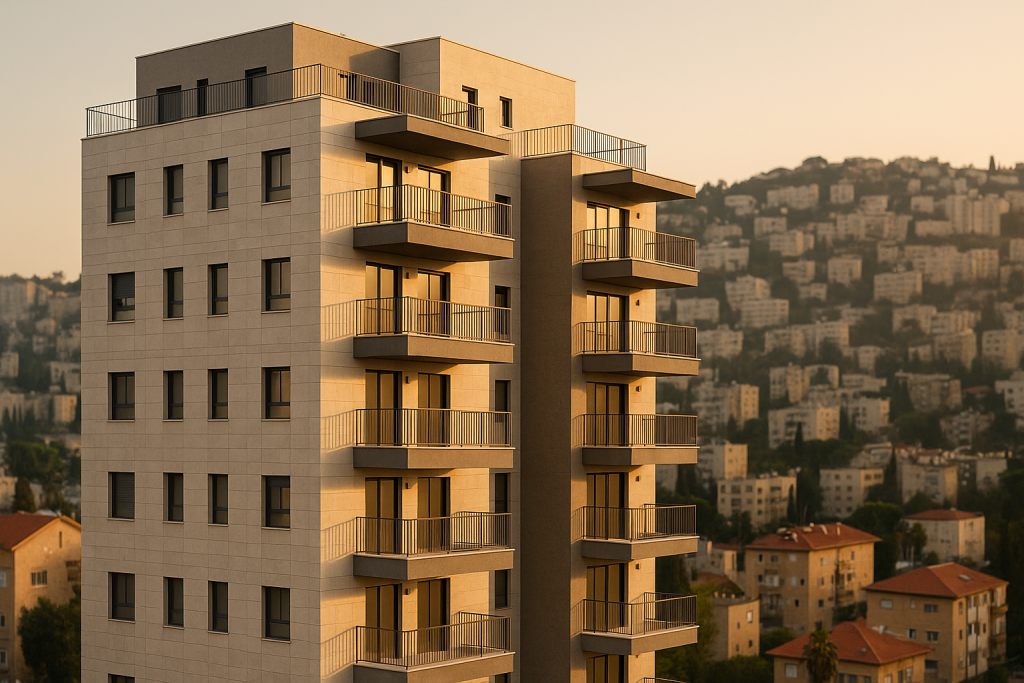
The Israeli real-estate market in 2026 poses one central question to investors: is it better to invest in Tel Aviv, the traditional flagship market, or does real estate in Haifa offer a far superior yield opportunity? The figures from the ground tell a surprising story, and anyone looking for a real return on investment already knows the answer. In this guide we make a comprehensive comparison, with data, tables and practical calculations, so you can make an informed decision.
✓ Key points
- Why Haifa vs. Tel Aviv real-estate yield is the most important question of 2026
- The full comparison table: Haifa vs. Tel Aviv real-estate yield
- Why Haifa is growing so fast, the factors driving the growth
- A practical yield calculation: Haifa vs. Tel Aviv, worked examples
Table of Contents
- Why Haifa vs. Tel Aviv yield is the important question
- The full comparison table
- Why Haifa is growing so fast
- A practical yield calculation: Haifa vs. Tel Aviv
- Comparing Haifa neighborhoods
- Long-term yield: 5 and 10 years
- Risks and challenges in each city
- Which city suits whom
- Combined investment strategies
- Haifa is the clear winner
- Frequently asked questions
Why Haifa vs. Tel Aviv real-estate yield is the most important question of 2026
Tel Aviv was considered the only address for serious real-estate investment. But in 2026, the equation has changed. Haifa grew 12.4% in price rises, above the national average of 9.8%. In Tel Aviv, by contrast, price rises slowed to just 4.2%, the market is almost tapped out. What this means for the investor: Haifa vs. Tel Aviv real-estate yield leans unequivocally in Haifa’s favor, and this is not just an opinion but clean math.
According to Bank of Israel figures, the gap between the rental yield in Haifa and in Tel Aviv reached a historic high in 2025: the net yield in Haifa stood at 4.1% compared with 1.9% in Tel Aviv. In other words, for every shekel invested in Haifa, the return is double that in Tel Aviv, and this is before factoring in the appreciation.
The full comparison table: Haifa vs. Tel Aviv real-estate yield
| Parameter | Haifa | Tel Aviv | Difference |
|---|---|---|---|
| Price of a 3-room apartment | 1.4-2.0 million | 3.8-5.5 million | Haifa cheaper by 55-65% |
| Monthly rent | 4,200-6,500 | 7,500-12,000 | Tel Aviv higher by 60-80% |
| Gross annual yield | 4.5%-6.2% | 2.2%-3.1% | Haifa double |
| Net yield | 3.8%-5.4% | 1.6%-2.5% | Haifa double |
| Annual appreciation (3 years) | 8%-12% | 3%-6% | Haifa higher by 2-3x |
| Payback period | 18-22 years | 28-38 years | Haifa faster by 10-16 years |
| Minimum equity | 350,000-500,000 | 950,000-1,400,000 | Haifa more accessible by 60-65% |
| Purchase tax (8%) | 56,000-120,000 | 240,000-440,000 | Haifa cheaper by 75% |
| Total ROI (year 1) | 10-18% | 4-9% | Haifa double+ |
The numbers speak for themselves: the net yield in Haifa is double that of Tel Aviv, and when you factor in the appreciation, the picture is even more dramatic.
Why Haifa is growing so fast, the factors driving the growth
Haifa’s massive growth is no accident. It is a combination of built-in factors driving the rise in prices and yield:
The light rail and the metro: Haifa’s new light rail (20 billion shekels) will completely change the city’s accessibility. Neighborhoods along the line will become reachable within 20-30 minutes, which will draw additional demand for apartments and raise prices.
Technology and biotech hubs: Salesforce, Google, Amazon, Intel and Microsoft in Haifa together create more than 12,000 high-tech jobs. People earning 28,000-42,000 shekels who are looking for quality apartments, steady demand that ensures high occupancy and rising rents. In Tel Aviv, the market is saturated, but prices have already priced in the yield.
Massive Pinui-Binui: 47 active projects in 2026 are changing the face of entire neighborhoods. Residents who entered a Pinui-Binui three years ago are seeing gains of 35-55% in property value. This is a “growth engine” that does not exist in Tel Aviv on the same scale.
Universities: 27,000 students at the Technion and the University of Haifa, 6,000+ medical staff in the medical centers, and tourists from all over the world to the Bahai Center, steady rental demand all year round.
Entry prices: for an apartment in Haifa you need 350,000-500,000 shekels of equity (plus costs). In Tel Aviv, 950,000-1,400,000 shekels. The meaning: with the same capital, in Haifa you can buy 2-3 apartments and diversify risk.
A practical yield calculation: Haifa vs. Tel Aviv, worked examples
Let’s run the full calculation, with real numbers from the ground:
Example 1, the Ahuza neighborhood, Haifa: a 3-room apartment at 1,500,000 shekels. Equity: 750,000 shekels + costs: ~130,000 shekels. Total investment: 880,000 shekels. Rent: 5,800 shekels a month = 69,600 shekels a year. Mortgage repayment: ~4,750 shekels a month. Net positive cash flow: +1,050 shekels a month. Gross rental yield: 4.64%. Expected appreciation over 5 years: 50%-65% (750,000-975,000 shekels). Weighted total return on equity (first year): about 14%.
Example 2, the Jaffa neighborhood, Tel Aviv: a 3-room apartment at 3,200,000 shekels. Equity: 1,600,000 shekels + costs: ~270,000 shekels. Total: 1,870,000 shekels. Rent: 7,500 shekels a month = 90,000 shekels a year. Mortgage repayment: ~10,200 shekels a month. Net cash flow: -2,700 shekels a month (negative!). Gross rental yield: 2.81%. Expected appreciation over 5 years: 18%-28%. Total return: about 5.5%.
The conclusion: in Haifa the rent covers the mortgage and leaves positive cash flow. In Tel Aviv, the investor pays out of pocket every month, and the return depends solely on long-term appreciation.
Comparing Haifa neighborhoods, where it pays off most
| Neighborhood | Average price | Average rent | Gross yield | Appreciation potential |
|---|---|---|---|---|
| Hadar | 850,000-1,200,000 | 3,200-4,500 | 4.5%-6.2% | Very high (renewal) |
| Neve Sha’anan | 1,100,000-1,600,000 | 4,000-5,500 | 4.1%-5.0% | High (Pinui-Binui) |
| Ahuza | 1,400,000-2,300,000 | 5,000-7,000 | 3.7%-4.6% | Medium-high (high-tech) |
| French Carmel | 1,800,000-3,000,000 | 5,500-8,000 | 3.2%-4.0% | Medium (premium) |
| Bat Galim | 900,000-1,500,000 | 3,500-5,200 | 4.2%-5.4% | High (tourism + renewal) |
| Kiryat Haim | 800,000-1,300,000 | 3,000-4,500 | 4.2%-5.1% | Medium (a stable market) |
Rule of thumb: developing neighborhoods (Hadar, Neve Sha’anan, Bat Galim) offer a higher rental yield AND higher appreciation potential, but also higher risk. Established neighborhoods (Ahuza, Carmel) offer stability and security.
Long-term yield: 5 and 10 years, the full picture
A long-term comparison paints an even more dramatic picture in Haifa’s favor:
| Period | Haifa (total ROI) | Tel Aviv (total ROI) |
|---|---|---|
| Year 1 | 10-18% | 4-9% |
| 5 years | 80-120% | 35-55% |
| 10 years | 200-350% | 80-130% |
The numbers are unequivocal: an investor who bought an apartment in Hadar in 2020 for 650,000 shekels, the apartment is worth 1,200,000 shekels today (an 85% rise over 6 years), and in parallel received cumulative rent of 230,000 shekels. Total return on equity: over 200%. In Tel Aviv, an apartment at the same price (if one existed) would have cost about 2,000,000 shekels, a rise of just 50%, and a total return of 65%.
Risks and challenges in each city
Haifa and Tel Aviv offer different risk profiles:
Haifa’s risks: a younger market (sharp price swings), lower liquidity (hard to sell quickly), lower tenant quality than Tel Aviv (higher maintenance), and few new projects (new supply factors change prices).
Tel Aviv’s risks: a real-estate bubble (excessive prices), stricter regulation (limits on the number of investment apartments), and a negative yield on rent (the apartment does not cover the mortgage).
Tel Aviv’s advantages: high liquidity (easy to sell at a good price), long-term stability and security, and a deep market with significant demand.
Which city suits whom, an investor profile
Haifa suits: investors looking for a high return on capital, investors who want to diversify risk with 2-3 properties, investors looking for positive monthly cash flow, young investors with limited equity, and anyone willing to hold an apartment for 10+ years.
Tel Aviv suits: investors with high capital looking for “safe real estate” with maximum liquidity, investors willing to accept a low but stable return, and institutional investors who want to preserve value over the long term.
Combined investment strategies, Haifa and Tel Aviv
Strategy 1, buy + rent (Haifa): buy an apartment, rent it out, and let the rent cover the mortgage while the value rises. Suited to investors looking for ongoing cash flow + appreciation. Expected return: 10-18% a year.
Strategy 2, flip + appreciation (Haifa): buy an apartment in a renewal neighborhood, renovate it, sell after 2-3 years at a profit of 30-50%. Suited to investors with a longer horizon and the ability to repay without rental income.
Strategy 3, hold + yield (Tel Aviv): buy an apartment in a central location (north Tel Aviv, Ramat Gan), hold it for 10-20 years and let the market do the work. Expected return: 4-8% a year, but stable and secure.
Haifa is the clear winner, summary
Haifa vs. Tel Aviv real-estate yield leans unequivocally in Haifa’s favor on every metric. Tel Aviv remains a safe market with high liquidity, but not a yield market. Anyone who spots the opportunity in Haifa today and acts will enjoy it in the future. With low entry prices, double the yield, and significant appreciation potential, the choice is clear. The question is not “whether” to invest in Haifa, but “where” and “when”.
Frequently asked questions
What is the average yield on an apartment in Haifa?
4.5%-6.2% gross, depending on the neighborhood. Hadar and Neve Sha’anan reach 5.5%+, Ahuza and Carmel 3.5-4.5%. Adding appreciation, the total ROI reaches 10-18% a year.
How much equity do you need to invest in Haifa?
350,000-500,000 shekels for a 3-room apartment (including purchase tax and costs). In Tel Aviv you need at least 950,000-1,400,000 shekels. The gap: with the same capital, in Haifa you can buy 2-3 apartments.
Will apartment prices in Haifa keep rising?
Yes, based on growth trends: a light rail, massive Pinui-Binui, and rising demand. The forecast: rises of 8%-15% a year in strategic neighborhoods.
Which Haifa neighborhood is the best to invest in?
Hadar and Neve Sha’anan for the highest yield. Ahuza and Carmel for stability and security. Bat Galim for a mix of tourism and investment. The choice depends on your goal.
Is Tel Aviv still a good investment?
Tel Aviv is a safe investment with high liquidity. But it is not a yield investment, a net yield of just 1.6-2.5% compared with 3.8-5.4% in Haifa. For anyone seeking a real return, Haifa is preferable.
Looking for a smart real-estate investment in Haifa?
The Ahuza team guides investors through every stage of the process, from sourcing to handover.
Ahuza Real Estate, experts in real-estate investments in Haifa and in urban renewal, TAMA 38 and Pinui-Binui. Guiding private investors, advising on projects and knowing the Haifa real-estate market inside out.
Last updated: April 2026 | Verified by the Ahuza Real Estate team
Related articles
מאמרים קשורים
- "30-40 אלף שקל בקיץ": דור ניימן מסביר איך משפחות יכולות לחסוך כבר השנה בראיון ל- YNET על יוקר החופש הגדול
- מס רכישה דירה ראשונה בחיפה 2026, מדרגות, פטור וחיסכון
- בראיון בתחנת רדיו "נדלניסט": למה משקיעים עדיין שואלים על חזירי בר וזיהום אוויר – ומה באמת קורה בשטח
- מומחה הנדל"ן דור נוימן בערוץ 14 קורא לצעירים להכניס רגל בדלת – גם אם זה רחוק מהמרכז