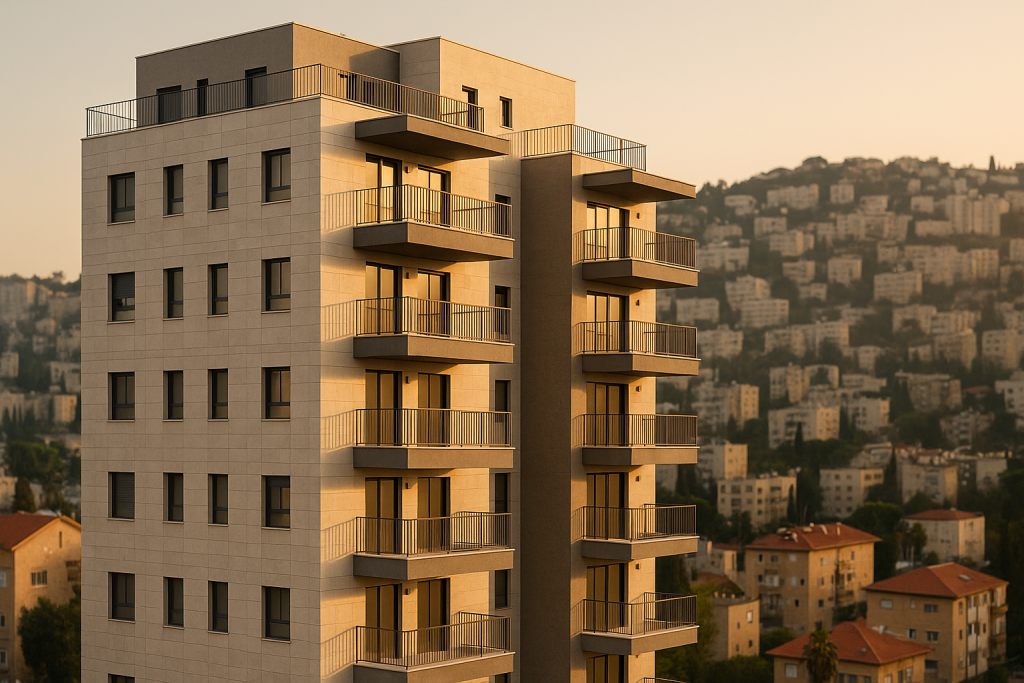
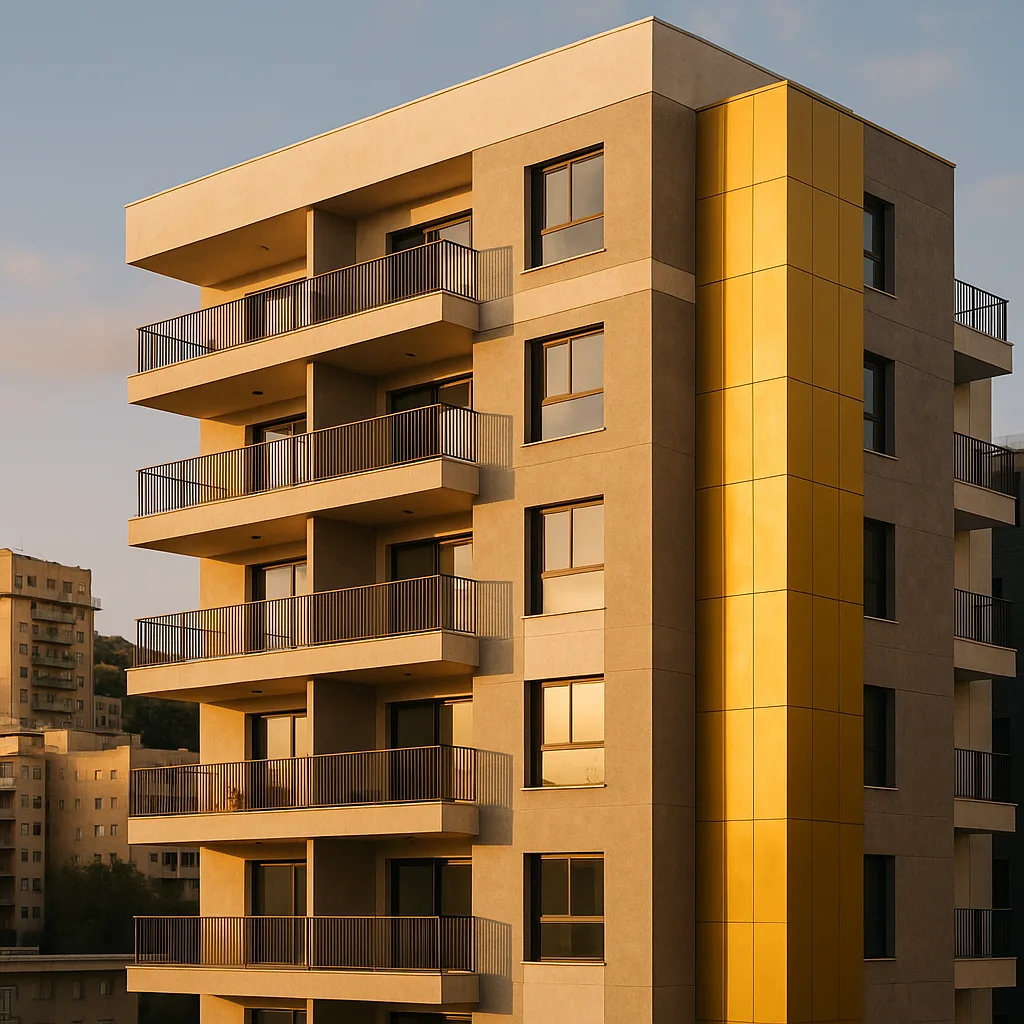
Urban renewal in Haifa has been undergoing a genuine revolution in recent years, reshaping the skyline of the northern city. If in the past Pinui-Binui projects seemed like a distant dream, today, thanks to the HP/2030 master plan, the processes have become more accessible and orderly for thousands of residents. The Haifa real estate market now offers exceptional opportunities, but to realize them you need to understand in depth the rights you are entitled to.
Table of Contents
- – What is the HP/2030 plan and how does it change the face of urban renewal in Haifa?
- – How do I check whether my building is included in the HP/2030 Haifa plan?
- – Building rights under the HP/2030 Haifa plan: what are you really entitled to?
- – Feasibility check for Pinui-Binui in Haifa HP/2030, how to do it right
- – What are the common mistakes in advancing a Haifa urban renewal project?
- – Questions and answers
- – Summary
For a full review of the active projects, rights and up-to-date tracks, you can consult the complete guide to urban renewal in Haifa.
The HP/2030 plan is effectively the backbone of urban development in Haifa. It defines exactly what may be built, where and under what conditions. For apartment owners in older buildings, understanding the plan is critical before deciding to engage with a developer. Because of the planning complexity, it is always recommended to carry out an urban renewal suitability check as early as possible.
What is the HP/2030 plan and how does it change the face of urban renewal in Haifa?
The HP/2030 plan is Haifa’s comprehensive local master plan. Its main goal is to regulate the city’s growth up to 2030, while emphasizing the upgrading of the veteran fabric. Unlike the past, when every project was examined on an isolated basis, today the Haifa Municipality Engineering Administration operates according to a broad strategic vision.
The plan directly affects veteran neighborhoods in Haifa such as:
- Hadar HaCarmel, infrastructure upgrades and preservation alongside building additions.
- Kiryat Eliezer, a central hub for large-scale Pinui-Binui projects.
- Ramot Remez and Neve Sha’anan – reinforcing buildings and bringing them up to earthquake standards.
Through the plan, the municipality seeks to balance adding housing units with preserving public spaces and adequate infrastructure. As a result, urban renewal in Haifa is not just a matter of a single building, but part of an entire urban fabric.
How do I check whether my building is included in the HP/2030 Haifa plan?
Many people ask themselves, “How do I check whether my building is included in the HP/2030 Haifa plan?” The answer lies in the geographic location of the structure and its assignment to the planning zones. The plan divides the city into statutory zones, with different guidelines for each zone.
For example, an area defined for “plot-based renewal” will allow smaller additions, whereas an area for “complex-based renewal” will usually lead to a demolition-and-reconstruction track. To know for certain, you should review the plan documents available on the Haifa Urban Renewal Administration website.
Haifa urban renewal GIS map: a guide to checking by address
The Haifa Municipality GIS (Geographic Information System) is a powerful tool. Even if you are not a tech person, you can use it easily.
Here are the steps for the check:
- Go to the Haifa Municipality GIS system website.
- Enter the exact address of the building in the search box.
- Activate the “master plans” and “urban renewal” layers.
- Click on your plot to see the planning code.
Pay attention to the colors on the map; they represent land uses. If your building is colored in a shade indicating intensive residential use, there is a high chance you have significant rights potential within Haifa urban renewal.
Building rights under the HP/2030 Haifa plan, what are you really entitled to?
Building rights under the HP/2030 Haifa plan are determined by economic multipliers and urban considerations. In most cases, apartment owners are entitled to added floor area for the existing apartment, a safe room (mamad), a sun balcony and underground parking.
In addition, the plan defines the permitted height of the buildings. In the Carmel ridge areas, the height is sometimes limited to preserve view lines, whereas in the waterfront neighborhoods and the Lower City it is possible to build higher. It is important to understand that the rights are not automatic; they are conditional on approval by the Local Committee and on meeting density standards.
| Renewal track | Average addition to apartment area | Accompanying facilities |
|---|---|---|
| Pinui-Binui (demolition) | 12-25 sqm | Storage room, parking, elevator |
| Reinforcement and extension (the former TAMA 38/1 track, ended in 2023) | 12-15 sqm | Elevator, structural reinforcement |
| Shaked Alternative | Varies by area | Building infrastructure upgrade |
The TAMA 38 alternative in Haifa, demolition and reconstruction versus reinforcement
Since the national TAMA 38 expired, the HP/2030 plan came into effect as the TAMA 38 alternative in Haifa. The municipality clearly prefers demolition-and-reconstruction tracks over reinforcing existing buildings. The reason is the ability to re-plan the underground infrastructure and create a higher-quality public space.
That said, in the reinforcement-and-addition track, the advantage is a shorter execution time and the residents remaining in the building during part of the works. Nevertheless, demolition and reconstruction grants a much higher real estate value to the new apartment, since it is a completely modern building that meets strict earthquake standards.
Feasibility check for Pinui-Binui in Haifa HP/2030: how to do it right
Before setting out, you must carry out a feasibility check for Pinui-Binui in Haifa HP/2030. This check examines three aspects:
- Planning aspect, does the municipality approve the requested number of apartments?
- Economic aspect, is the project profitable for the developer after paying the betterment levy?
- Social aspect, is there agreement from at least 66% of the apartment owners?
In addition, the Haifa Urban Renewal Authority requires the allocation of public spaces in large projects. This could be a ground-floor kindergarten or an adjacent public garden. Without addressing the public’s needs, the plan will not be approved by the planning committees. For more information and to arrange a professional check, it is recommended to contact the Ahuza experts.
What are the common mistakes in advancing a Haifa urban renewal project?
The most common mistake is signing “Non-Shop” documents too quickly with developers, without legal and planning guidance. Another mistake is ignoring the guidelines of the Haifa Urban Renewal Authority, which leads to years of delays in the planning committees.
As a result of a lack of understanding, many residents demand unrealistic benefits that torpedo the project’s feasibility. It is important to remember that Haifa urban renewal is a “win-win” deal, and a certain amount of flexibility is required to bring the project to fruition.
Questions and answers
How long does an urban renewal process in Haifa take?
On average, a Pinui-Binui process takes between 7 and 12 years, whereas densification and reinforcement tracks can take 4-6 years.
Can every old building in Haifa undergo Pinui-Binui?
No. It depends on the land uses in HP/2030, the physical condition of the structure and the economic feasibility for the developer.
What is the role of the Haifa Urban Renewal Authority?
The Authority serves as a liaison body between the residents, the developers and the municipality. It provides information, helps remove obstacles and oversees the quality of the planning.
Summary
Haifa urban renewal is the key to upgrading your quality of life and growing your personal capital. The HP/2030 plan offers a clear map for the future, but the road to realizing your rights requires knowledge and expertise. Don’t leave your future to chance.
In addition to your own checks, professional guidance from a company specializing in the field can shorten processes and prevent heartache. Now is the time to act and make sure your building is part of Haifa’s construction momentum.
Contact the Ahuza experts for a free consultation and rights check
Want to know whether your apartment meets the criteria? Don’t wait. Contact the Ahuza team now for an initial, free feasibility check. Ahuza will examine your plot data under the HP/2030 plan for you and help you understand exactly what rights you are entitled to. Click here to schedule a meeting and start the journey to your new apartment in Haifa.
Additional source: Bank of Israel
More articles you may find interesting
Looking for a smart real estate investment in Haifa?
The Ahuza team guides investors through every stage of the investment process, from sourcing to handover.
Talk to usFrequently asked questions
What is the HP/2030 plan and its building rights?
How do you choose the HP/2030 building rights track?
How much does the HP/2030 building rights process cost?
Last updated: April 2026