Real Estate Investment in Haifa 2026, an Investor’s Guide
Table of Contents
- Why is Haifa an interesting investment target in 2026?
- What are evacuation-construction plans and how do they affect investment?
- Which Haifa neighborhood is the most worthwhile for investment in 2026?
- What are the main risks of investing in Haifa in 2026?
- How much return can you expect from investing in Haifa?
- How to start investing in real estate in Haifa?
- What are the trends in the Haifa real estate market for the coming years?
- Frequently asked questions
Why is Haifa an interesting investment target in 2026?
Haifa has become a magnet for real estate investment thanks to a combination of economic and government factors: falling interest rates, government urban renewal plans, and rising demand from young families returning to the city. Unlike Tel Aviv, where prices have reached a ceiling, Haifa still offers a competitive price-to-value ratio with great investment potential.
The years 2024–2026 mark a turning point in Haifa’s description as an investment city. Area-wide evacuation-construction plans approved by the Haifa Municipality are opening doors to urban renewal projects in neighborhoods such as Hadar, North Carmel and the Port. Investors who know the market know that these projects boost the value of nearby properties within 2–3 years.
Ahuza Real Estate has followed these developments closely for years, and found that investors who focus on specific neighborhoods in Haifa, such as North Carmel and Hadar, gain an average of 25–30% over 5 years. This is not a gamble, but the result of planned government policy.
In addition, the Krayot (Kiryat Yam, Kiryat Motzkin, Kiryat Ata) serve as a convincing alternative for investors seeking lower prices with similar potential. Higher education, proximity to Haifa, and improved infrastructure make the Krayot a growing attraction.
What are evacuation-construction plans and how do they affect investment?
Evacuation-construction is a mechanism in which property owners in certain neighborhoods receive the right to build new, larger buildings in exchange for evacuating the old ones. This increases housing density, raises land value, and creates significant investment opportunities.
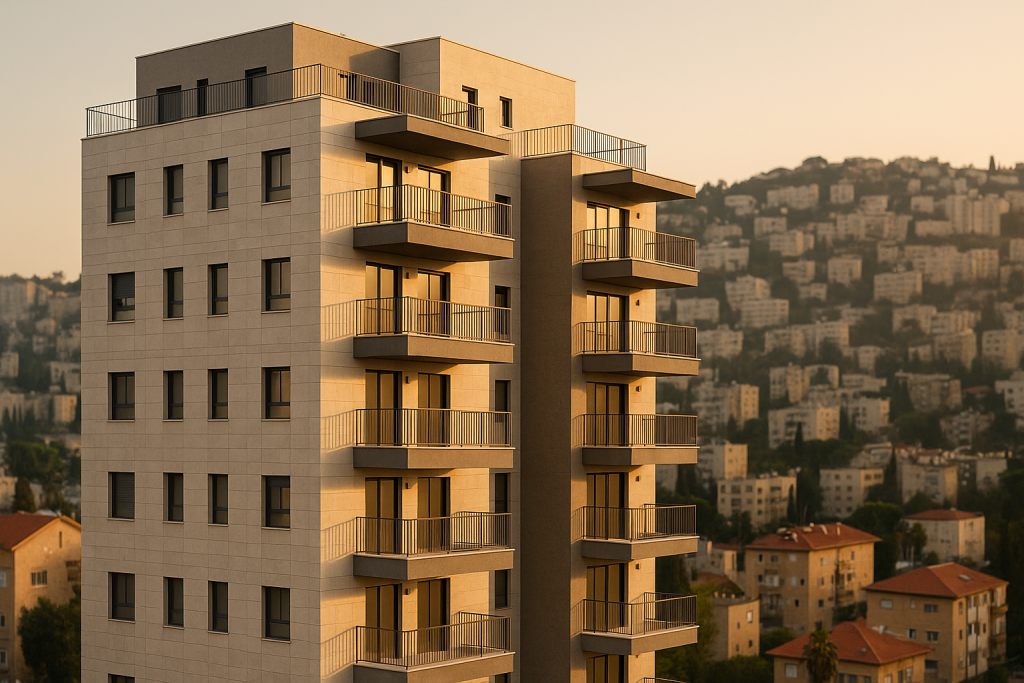
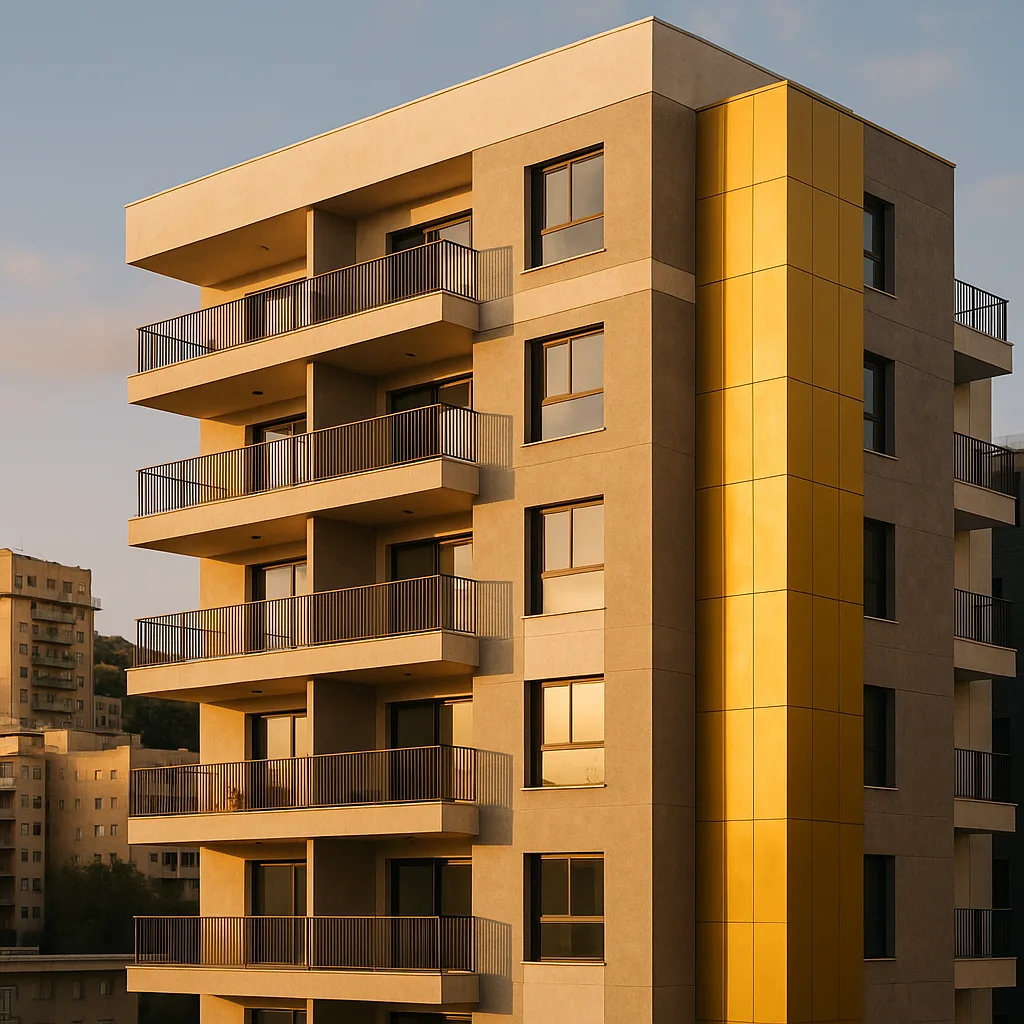
In Haifa, evacuation-construction plans are advancing at a rapid pace. Neighborhoods such as Hadar and North Carmel are undergoing a significant physical change: old buildings are becoming modern residential buildings of 8–12 floors. This means new apartments are being created in neighborhoods that until recently were relatively cheap.
Investors who bought properties in these neighborhoods 3–4 years ago saw a return of 35–45% from the change in the market alone. Ahuza Real Estate tracks these plans in real time and helps clients identify neighborhoods that are in the early stages of renewal.
It is important to understand: evacuation-construction does not happen overnight. The process usually takes 3–5 years from plan approval to completion of construction. Smart investors buy in stages 1–2 of the process, when prices are still low, and sell in stages 4–5, when demand peaks.
| Neighborhood | Price range (3-room) | Growth potential |
|---|---|---|
| North Carmel | ₪1.8–₪2.4 million | 15–20% over the next two years |
| Hadar | ₪1.9–₪2.5 million | 12–18% over the next two years |
| The Port | ₪2.2–₪2.9 million | 18–25% over the next two years |
Comparison of Haifa neighborhoods for investment in 2026
Which Haifa neighborhood is the most worthwhile for investment in 2026?
Three neighborhoods in Haifa present clear investment potential in 2026: North Carmel (thanks to active evacuation-construction), Hadar (thanks to proximity to the port and infrastructure renewal), and the Port itself (thanks to mixed residential and retail projects).
North Carmel: This neighborhood is undergoing rapid change. Area-wide evacuation-construction plans have approved the construction of hundreds of new apartments. Prices currently range from ₪1.8–₪2.4 million for a 3-room apartment, but a rise of 15–20% is expected over the next two years. The neighborhood attracts young families thanks to its proximity to the University of Haifa and improved public gardens.
Hadar: Haifa’s historic neighborhood is undergoing a planned urban renewal process. The Haifa Municipality has invested in improving infrastructure, parks, and the seafront. Investors who bought in Hadar 4 years ago saw a return of 28–32%. Demand continues to grow.
The Port Area: This is the largest project in Haifa. A mixed project of residential, retail and entertainment is changing the face of the city. New apartments in the Port start at ₪2.2 million, but very high demand is expected following the completion of the project.
In the Krayot, Kiryat Yam presents interesting investor value: prices 20–25% lower than Haifa, proximity to the sea, and rising demand from families. Ahuza Real Estate recommends Kiryat Yam for medium-budget investors seeking a long-term return.
For deeper reading on the topic, we also recommend consulting our guide on impressive real estate investments in Haifa.
What are the main risks of investing in Haifa in 2026?
Every real estate investment involves risks. In Haifa, the main risks are: fluctuations in housing demand, delays in renewal plans, and high interest rates that affect purchasing power.
Demand-fluctuation risk: Haifa depends largely on demand from young families and internal migrants from Tel Aviv. If demand falls, prices may stall. That said, data from 2024 shows that demand remains strong.
Construction-delay risk: Evacuation-construction projects are often delayed due to legal issues, construction problems, or financing problems. Investors need to be aware that the return will not materialize immediately.
Interest-rate risk: If interest rates rise significantly, purchasing power will fall, and prices may stall. That said, the Bank of Israel is expected to continue lowering interest rates in the second half of 2026.
Ahuza Real Estate advises clients to diversify their investment portfolio: don’t invest everything in one neighborhood or one project. Buy in different neighborhoods, at different construction stages, and in different price ranges.
How much return can you expect from investing in Haifa?
The return from real estate investment in Haifa depends on the neighborhood, the holding period, and the condition of the property. On average, investors can expect a return of 8–12% per year over 5 years, plus rental income.
Data from 2022–2024 shows that apartments in Haifa bought in 2019 and sold in 2024 saw a return of 35–50% in total, or about 6–8% per year. That said, apartments in neighborhoods that underwent evacuation-construction saw a higher return: 45–65% in total.
Rental yield: In Haifa, rents rise at a rate of 5–7% per year. A 3-room apartment in North Carmel or Hadar yields about ₪2,500–₪3,200 per month, or about 4–5% annual yield on an initial investment of ₪2 million. That is above the yield of government bonds.
Investors who combine capital appreciation with rental yield can expect a total return of 10–15% per year over 5 years. This is not guaranteed, but history indicates that it is reasonable.
How to start investing in real estate in Haifa?
Starting a real estate investment in Haifa requires planning: setting a budget, choosing a neighborhood, and conducting thorough market research. Ahuza Real Estate assists investors at every stage of the process.
Stage 1: Setting a budget and the goal. Are you investing for the long term (5+ years) or the short term (2–3 years)? Are you looking for rental income or price appreciation? This will determine which neighborhood and which type of property suits you.
Stage 2: Market research. Before you buy, check the market prices in the neighborhood you have chosen. Check rental prices. Check whether there are urban renewal plans in the neighborhood. Ahuza Real Estate provides up-to-date market reports that assist in this process.
Stage 3: Obtaining financing. Most investors use a mortgage. Check interest rates and terms with different banks. Currently (2026), interest rates range from 4.5–5.5% for a 20-year loan.
Stage 4: Purchase and legal review. Work with a lawyer who will check the property, the claims, and the relevant plans. This is a critical stage that should not be overlooked.
Stage 5: Managing the property. If you rent out the property, you will need to deal with tax reporting, maintenance, and insurance. Ahuza Real Estate offers property management services for investors who prefer not to deal with these details themselves.
What are the trends in the Haifa real estate market for the coming years?
The Haifa real estate market is in rapid transformation. The main trends for 2026 are: accelerated urban renewal, growing demand for smart housing, and increased investment in infrastructure.
Accelerated urban renewal: The Haifa Municipality allocated a budget of ₪500 million to improve infrastructure, parks, and the seafront. This will increase the city’s appeal and raise property values in nearby neighborhoods.
Demand for smart housing: New apartments in Haifa are equipped with technology: smart heating, smart lighting, and advanced security. Investors are willing to pay a premium for these apartments. This creates an opportunity for investors who buy in new projects.
Increased investment in infrastructure: The Bank of Israel and the government are investing in infrastructure in Haifa: new roads, improved public transport, and a rail connection. This will increase Haifa’s accessibility and raise demand.
Rising demand from young families: Young families from Tel Aviv are moving to Haifa due to lower prices and a better quality of life. This trend is expected to continue in the coming years.
Facts in numbers
- 18% average rise in apartment prices in Haifa over the past two years, compared with an 8% rise in Tel Aviv. (Central Bureau of Statistics)
- 12% annual growth rate in housing demand in Haifa, driving rental prices and property values upward. (Bank of Israel, real estate market report)
Additional sources:
- Central Bureau of Statistics, real estate market data
- Bank of Israel, reports on the real estate market and interest rates
Frequently asked questions
Is it a good time to invest in Haifa now, in 2026?
Yes. Haifa is undergoing a significant change thanks to urban renewal plans and growing housing demand. Investors starting now can expect a return of 8–12% per year over 5 years. That said, as with any investment, there are risks.
What is the difference between evacuation-construction and urban renewal?
Evacuation-construction is a process in which property owners in a certain neighborhood receive the right to build new, larger buildings. Urban renewal is a broader term that includes improving infrastructure, parks, and public transport.
Which Haifa neighborhood is best for an investor seeking rental income?
North Carmel and Hadar are good neighborhoods for rental income, because there is high demand from young families. Rent in these neighborhoods ranges from ₪2,500–₪3,200 for a 3-room apartment per month.
How long does an evacuation-construction project take to complete?
Usually 3–5 years from plan approval to completion of construction. Smart investors buy in the early stages of the process, when prices are still low.
Does Ahuza Real Estate assist in the investment process?
Yes. Ahuza Real Estate provides investment advice, up-to-date market reports, property management services, and assistance in the purchase process. Contact our team to discuss investment options.
What are the risks of investing in Haifa?
The main risks are: demand fluctuations, delays in construction projects, and high interest rates. That said, risks can be reduced by diversifying investments across different neighborhoods and projects.
How much money do you need to start investing in Haifa?
It depends on your budget. An apartment in Haifa usually costs ₪1.8–₪2.9 million. Most investors use a mortgage, so you need equity of 20–30% of the price.
For an additional perspective on real estate investment in Haifa and why the city attracts more investors, it is worth reading the full review.
In summary
Real estate investment in Haifa in 2026 is a genuine opportunity for investors seeking a stable, long-term return. In a city undergoing dramatic change, with accelerated urban renewal plans and growing demand, the potential for price appreciation and rental income is significant. Whether you are a new or experienced investor, Ahuza Real Estate is here to help you navigate the market, identify opportunities, and build a successful investment portfolio. Contact our team today to start the conversation about your investment strategy.
Want to move forward?
The Ahuza Real Estate team is your address for answers
Last updated: 25 May 2026
To dive deeper into these topics: urban renewal in Haifa, evacuation-construction in Haifa, and also investment apartments in Haifa.