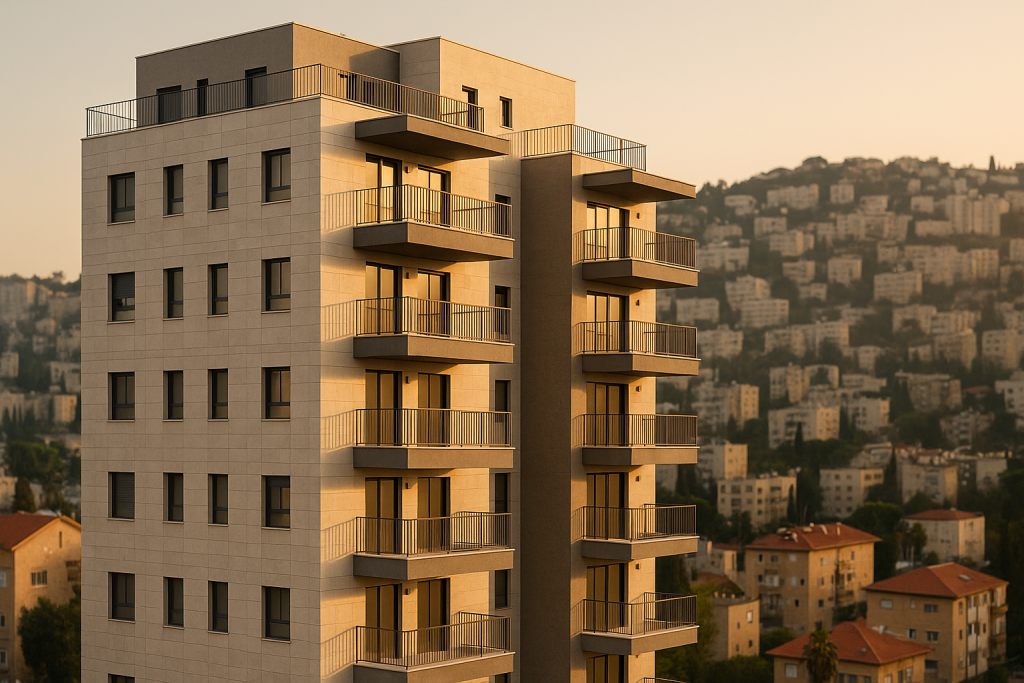
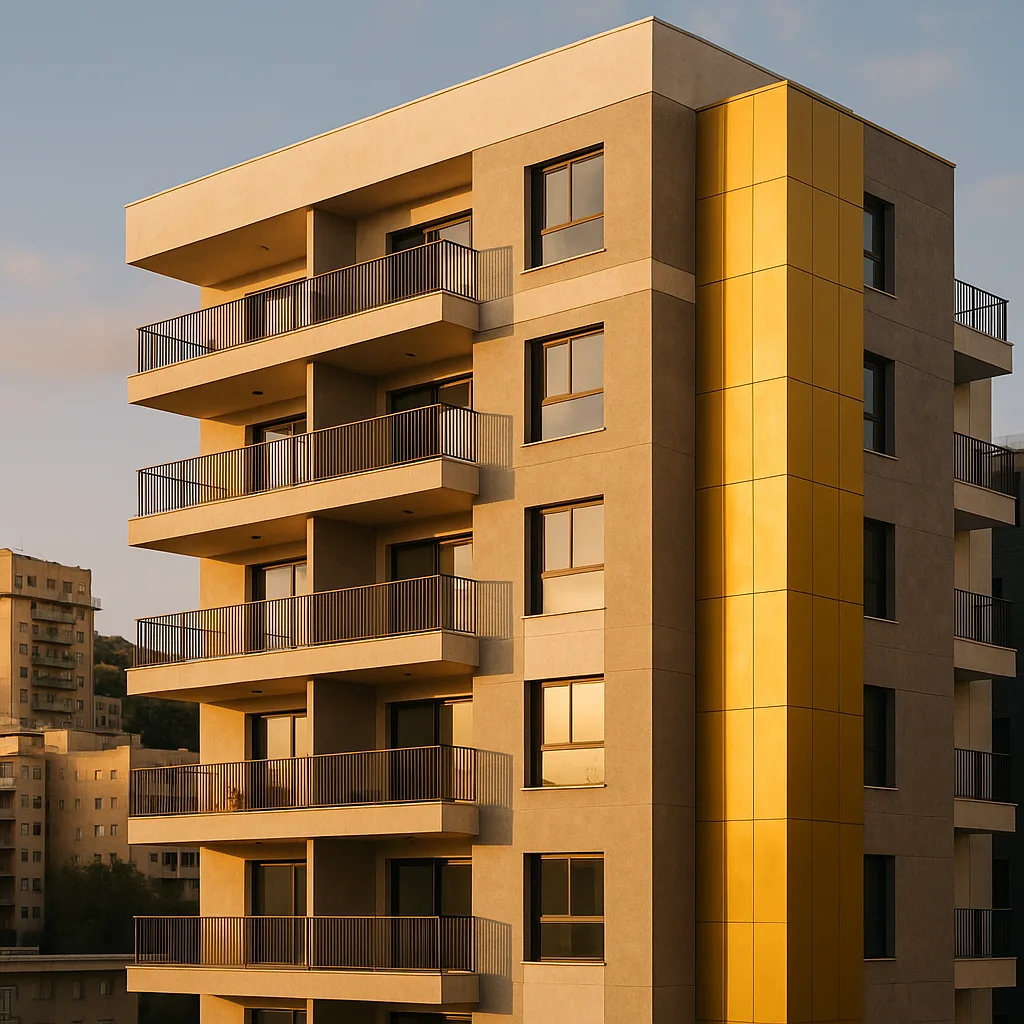
TAMA 38 tenant rights in Haifa rest on two anchors: a legal majority that allows a project to get off the ground, and guarantees that protect the new apartment even if the developer runs into difficulties. A large share of the buildings in Hadar, Neve Sha’anan, and Kiryat Eliezer were built before the 1980s, so most of the city’s older buildings face renewal in the coming years. TAMA 38 in Haifa is no longer the program you knew a decade ago, and understanding the current tracks is what will determine whether you receive fair compensation. Here you will find the full map of rights, from the required majority to alternative housing.
Guide contents.
- The real 2026 tracks that replaced TAMA 38.
- The majority required from residents on each track.
- The guarantees that protect your apartment.
- The importance of independent legal representation.
- The compensation in area and value due to residents.
- Alternative housing and timelines in a Haifa project.
- A comparison table between the tracks.
- The frequently asked questions section.
The real 2026 tracks that replaced TAMA 38
As of 2026, a single-building renewal project is handled mostly through the Shaked Alternative, and not through the veteran TAMA 38. The original TAMA 38 expired in October 2023, and today it is approved only in rare and exceptional cases. This confusion costs many residents time and money, so it is important to understand what each track really means before signing anything.
Three main tracks operate today in Haifa and across the country. The difference between them concerns the number of buildings in the project, the approving committee, and the scope of rights.
The Shaked Alternative (Amendment 136): a single building
The Shaked Alternative is the updated track for demolishing a single building and rebuilding it. Unlike the old TAMA, it requires a detailed plan approved by the local committee, and not just a building permit. The track defines a rights envelope in advance, sometimes up to about 400% of the existing area, and allows a combination of commercial and residential use alongside an upgrade of the neighborhood’s infrastructure. Residents whose building stands alone will, in most cases, move along this route.
Building renewal: local plans
Building renewal is an umbrella term for local plans that adopt the principles of the Shaked Alternative for a single plot or building. In Haifa, area plans such as HP/2666 in Hadar regulate the building rights for individual buildings within a defined area, and shorten the planning procedure for the specific project.
Comprehensive renewal (Pinui-Binui): several buildings together
When a cluster of buildings is involved, the track is Pinui-Binui (Evacuation-Construction). It usually requires a minimum of around 24 existing housing units, is approved by the district committee, and spreads over roughly a decade. In return, it offers the highest compensation to the resident, because it replans an entire compound rather than a single building.
The majority required from residents on each track
Getting a project off the ground requires a majority of signatures from apartment owners, and the size of the majority varies by track. Once the majority is achieved, the law allows even refusing residents to be compelled, so that a small minority cannot halt the renewal of an entire building.
- A single building (Shaked Alternative / building renewal): a majority of the building’s apartment owners is required, and an unreasonably refusing resident is exposed to a claim from the other owners.
- Comprehensive Pinui-Binui: a majority of about 66% to 80% of the apartment owners in the compound is required, depending on the stage and circumstances, in order to advance the project before the committee and vis-a-vis the remaining residents.
The majority is not just a technical number. It is the moment when residents turn from a group of neighbors into an organized body that conducts a unified negotiation with the developer. At Ahuza Real Estate we have seen that buildings which set up an orderly representative committee early achieve better terms than buildings where each resident acts separately.
The guarantees that protect your new apartment
The guarantees are the heart of tenant rights, because they ensure that you receive a new apartment even if the developer runs into difficulties. In a renewal project, the resident hands over an existing asset and receives a promise of a future one, so the system of guarantees must be tight.
Sales Law guarantee
A Sales Law guarantee secures the value of the new apartment. If the developer fails midway, the guarantee allows the residents to complete the construction or to receive compensation equal to the promised apartment. This is the most important guarantee, and no agreement should be signed without it.
Defects guarantee and rental guarantee
A defects guarantee covers faults discovered in the new apartment in the first years after occupancy. A rental guarantee secures the alternative-housing payments throughout the entire construction period, so that you are not left without a roof over your head and without financing during the project. Alongside these, it is customary to add a tax guarantee that protects residents against unexpected tax liabilities.
The importance of independent legal representation
Residents are entitled to a lawyer and an appraiser on their behalf, whose fees the developer pays, and choosing them independently is one of the most important rights. A lawyer whom the residents choose themselves acts solely in their interest, examines the system of guarantees, the timelines, and the compensation, and is not dependent on the developer.
A common mistake is to agree to the lawyer the developer proposes. Even if he is professional, an inherent conflict of interest arises here. Organizing a representative committee with independent legal counsel is therefore the first step recommended even before signing any document. On this matter, it is worth relying on a local party familiar with Haifa’s committees and the relevant area plans.
Compensation for the resident: area and value delivered in a project
Compensation for the resident is measured mainly in added area, in the specification of the new apartment, and in the upgrade of the surroundings. In a demolish-and-rebuild project, the resident receives a completely new apartment, usually larger than the existing one, with a safe room (mamad), a balcony, an elevator, and parking. The scope of the addition depends on the track and the location within Haifa.
According to data from the Israel Land Authority and planning bodies, an optimal renewal project raises the apartment’s value by about 30% to 60% relative to the situation before the project, mainly thanks to a new apartment and an upgraded neighborhood. In Kiryat Eliezer and Hadar, where land is expensive and demand is high, the compensation tends to be more generous, because the developer benefits from a high sale value of the additional apartments.
It is important to check the compensation with the residents’ appraiser and not to settle for general promises. Analyze the area allocation in a table, compare similar apartments in nearby projects, and make sure the technical specification is anchored in the agreement and does not remain at the level of intention.
Alternative housing and timelines in a Haifa project
During construction, the developer provides residents with alternative housing, usually rent at the level of a similar apartment in the area. The interim period usually lasts between two and three years in a single-building project, and up to about a decade in a large compound project that includes several construction phases.
In Haifa, the hilly topography and the need for underground parking sometimes lengthen the timelines compared with flat cities. Proper planning of the evacuation phases, together with a solid rental guarantee, ensures that residents do not suffer financial harm during the wait. It is worth making sure the alternative housing is index-linked and that the payment mechanism is clear in advance.
Ahuza Real Estate accompanies residents in Haifa throughout all these stages, from setting up a representative committee and legal representation to monitoring the developer’s compliance with the timelines and guarantees.
A comparison table between the tracks
| Parameter | TAMA 38/2 (demolish and rebuild) | The Shaked Alternative (single building) | Pinui-Binui (comprehensive) |
|---|---|---|---|
| Status in 2026 | An old model, approved only rarely | The main track for a single building | Active and fully in use for compounds |
| Project scope | A single building | A single building (sometimes two) | About 24 units and up |
| Approving committee | A point permit | A detailed plan at the local committee | District committee |
| Estimated duration | Varies | About two to three years | Up to about a decade |
| Compensation for the resident | Moderate | High, a new apartment | The highest |
Anyone who wants to delve deeper into the differences between the tracks and the various areas of Haifa can consult our guide to urban renewal in Haifa, which reviews active projects by neighborhood. For official legal information, you can read about Pinui-Binui (Evacuation-Construction) on Wikipedia, and about renewal policy on the Government Authority for Urban Renewal website.
Frequently asked questions
What is the majority required to launch a renewal project in my building?
In a single building on the Shaked Alternative track, a majority of the building’s apartment owners is required, and a resident who refuses unreasonably is exposed to a claim. In comprehensive Pinui-Binui, a majority of about 66% to 80% of the apartment owners in the compound is required, depending on the project’s stage.
What guarantees am I entitled to receive from the developer?
The main guarantees are a Sales Law guarantee that secures the value of the new apartment, a defects guarantee for faults, and a rental guarantee that covers the alternative housing throughout construction. No agreement should be signed without a Sales Law guarantee.
Who pays the residents’ lawyer’s fee?
The developer bears the fee of the residents’ lawyer and appraiser, but the choice of them rests with the residents themselves. Independent, unbiased representation is an important right that prevents a conflict of interest with the developer.
What is the difference between TAMA 38 and the Shaked Alternative?
TAMA 38 is the old model whose validity expired in October 2023 and which is approved today only rarely. The Shaked Alternative, under Amendment 136, is the updated track for a single building, and it requires a detailed plan approved by the local committee with a rights envelope defined in advance.
How long does a renewal project in Haifa take?
A single-building project usually takes between two and three years, and a comprehensive Pinui-Binui project can reach up to about a decade. In Haifa, the hilly topography and underground parking may somewhat lengthen the timelines.
Where do I live during construction?
The developer provides alternative housing, usually rent at the level of a similar apartment in the area, throughout the construction period. It is recommended to make sure the payment is index-linked and backed by a rental guarantee.
Want to check your rights in a project?
The Ahuza Real Estate team examines for you the required majority, the guarantees, and the compensation, and accompanies residents in Haifa every step of the way.
Interested in urban renewal? Ahuza Real Estate, urban renewal with Ahuza Real Estate, proven experience in Haifa and the north.