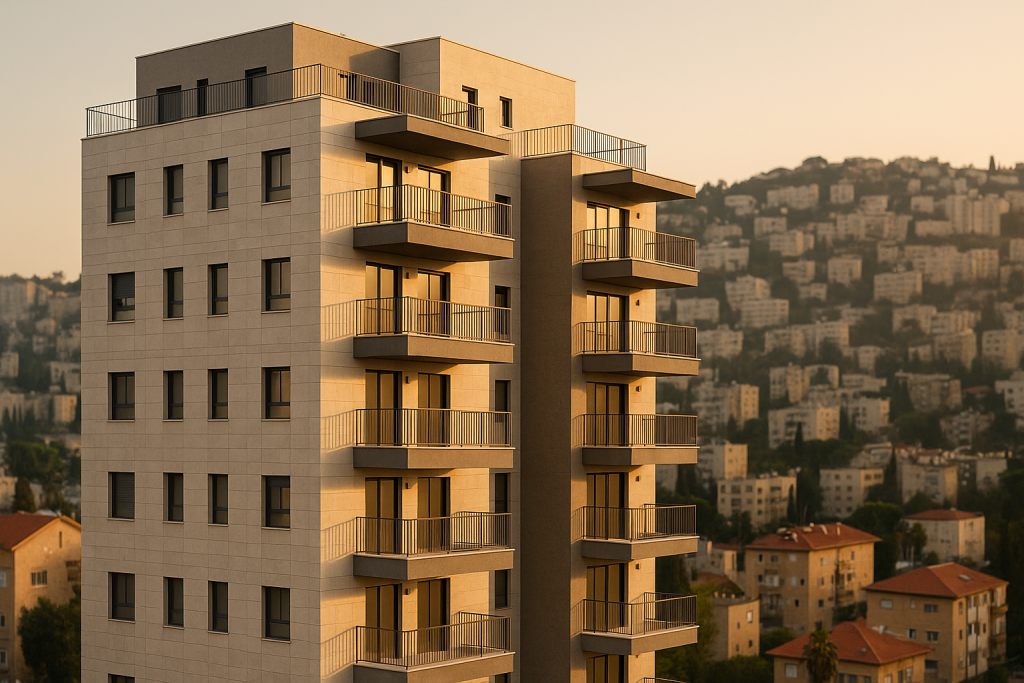
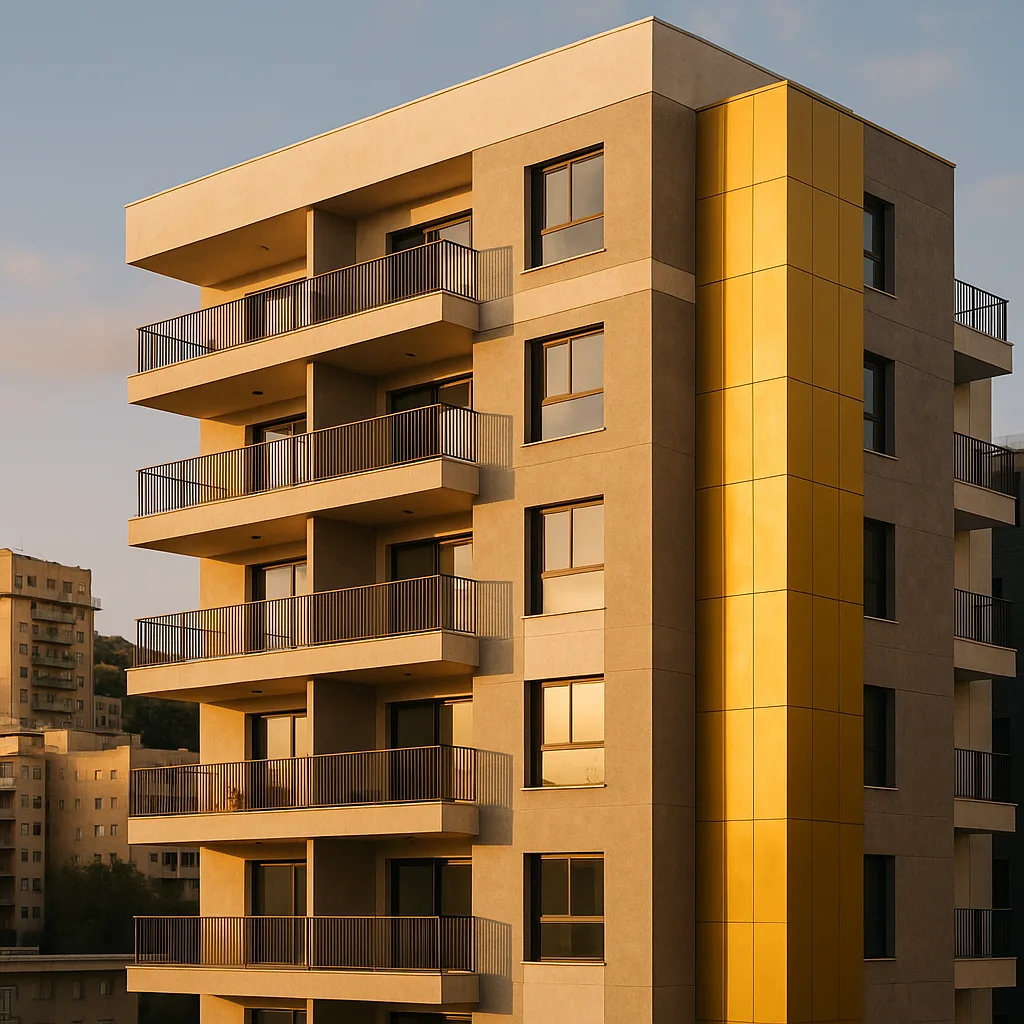
Urban renewal in Haifa is the main way for the city’s residents to upgrade an old building into a new, stronger and safer apartment, without paying for the construction out of pocket. In Haifa, a city with many buildings from the 1960s and 1980s and a unique hilly topography, this process carries special meaning: upgrading a building’s earthquake resilience, adding safe rooms, installing elevators in buildings on a slope, and renewing veteran neighborhoods. In this guide we explain to residents what options exist in 2026, how long it takes, what your rights are, and how to start off right.
What Urban Renewal Is and Why It Matters to Haifa Residents
Urban renewal is any process in which an old residential building undergoes reinforcement, renovation or demolition and reconstruction, guided by a developer who finances the work in exchange for additional building rights. The tenant receives an upgraded apartment, usually larger, with a safe room, a balcony, parking and an elevator, without spending money on the construction itself.
Haifa is considered one of the cities with the highest urban renewal potential in the country. Hundreds of buildings in neighborhoods such as Neve Sha’anan, Hadar, Ramat Alon and Kiryat Eliezer were built decades ago, many of them without a safe room and without sufficient earthquake resilience. Since the north lies close to the Syrian-African Rift, reinforcing buildings against earthquakes is not a luxury but a real safety need.
The Main Advantages for the Tenant
- A new apartment at no construction cost, the developer finances the entire construction and upgrade process.
- Earthquake resilience, structural reinforcement to Standard 413, critical in the north.
- A safe room in every apartment, a protected space that removes the need to go down to a shelter.
- A rise in the property’s value, an upgraded apartment in a new building is worth far more on the market.
- An improvement in quality of life, an elevator, organized parking, a new lobby and modern systems.
The Main Urban Renewal Tracks in 2026
It is important to understand that the original TAMA 38 ended at the close of 2023 and is no longer the active program today. Instead, the State of Israel is advancing new tracks that replace it. The two main tracks for tenants in Haifa are building renewal (the Shaked Alternative) for demolishing a single building, and area renewal (Pinui-Binui) for several buildings together.
Building Renewal: The Shaked Alternative
This is the track for a single building that undergoes demolition and reconstruction. Instead of relying on the old TAMA 38/2, the Shaked Alternative lets the local committee approve a detailed plan for a single building, with a significant addition of building rights of up to about 400 percent, depending on the characteristics of the lot. The tenants vacate the old building, the developer demolishes it and builds a completely new structure, and the tenants return to a new, larger apartment.
Area Renewal: Pinui-Binui
When several buildings are involved together, usually a minimum of about 24 housing units, this is area renewal, known as Pinui-Binui. Here an entire complex of old buildings is demolished and a new neighborhood is built in its place, with denser construction, public buildings, green spaces and renewed infrastructure. In Haifa this is the track suited to whole veteran neighborhoods in which most of the buildings need renewal.
Comparing the Tracks
Before starting, it is worth understanding which track suits your building. The following table sums up the main differences between the two main tracks in 2026.
| Parameter | Building Renewal (Shaked Alternative) | Area Renewal (Pinui-Binui) |
|---|---|---|
| Scope | A single building | Several buildings / a whole complex |
| Minimum number of units | No complex minimum | About 24 units and up |
| Approving body | Local committee, a detailed plan | Local / district committee |
| Estimated duration | 3 to 5 years | 5 to 8 years and more |
| Added rights | Up to about 400%, depending on the lot | Varies by the complex plan |
The Stages of the Process from Start to Finish
The urban renewal process runs in clear stages, and it is worth tenants knowing them so they always know where the project stands. These are the main stages:
Organization and the Committee Stage
The tenants set up a residents’ committee, choose a lawyer on their behalf, and begin checking the project’s feasibility. This is the most critical stage, because the decisions made here shape the entire course of the project. It is important that the lawyer represents the tenants and not the developer.
Choosing a Developer and Signing an Agreement
The committee examines several developers, compares offers and checks financial strength and prior experience. After negotiation, an urban renewal agreement is signed that defines the compensation to the tenants, the timelines and the guarantees. At this stage the consent of a majority of the tenants is required by law.
Planning, Permits and Approvals
The developer submits a detailed plan to the local committee in Haifa, including engineering checks, an appraiser’s opinion and authority approvals. This stage is usually the longest, and can last two years or more depending on the complexity of the project and the committee’s workload.
Evacuation, Construction and Occupancy
After a building permit is issued, the tenants move to alternative housing financed by the developer, the old building is demolished and construction begins. At the end, the tenants return to the new apartments with all the rights and additions that were agreed.
Your Rights as Tenants
The law in Israel protects tenants in the urban renewal process, and it is important to know these rights before signing. Among the main ones: alternative housing fully financed by the developer for the entire construction period, bank guarantees that secure completion of the project, and legal and appraisal guidance whose cost falls on the developer and not on the tenants.
In addition, you are entitled to supervision of construction quality, a return to an apartment of the area and specification agreed in advance, and the right to receive full, transparent information about the project’s progress at every stage. A tenant who feels their rights are being harmed can turn to the competent authorities, but the best route is professional guidance from day one.
Common Mistakes to Avoid
Many tenants enter the process without sufficient preparation and pay dearly for it. To start off right, watch out for the following mistakes:
- Signing too quickly, do not sign an agreement before a thorough legal review of all the clauses.
- Choosing a developer by compensation alone, financial strength and experience matter no less than the size of the compensation.
- The absence of an organized committee, without a strong committee, the developer has a free hand.
- Relying on the developer’s lawyer, tenants deserve independent, separate representation.
- Lack of documentation, keep every document, agreement and item of correspondence throughout.
Haifa’s Unique Characteristics That Affect the Process
Haifa is not an ordinary flat city, and its hilly topography directly affects the planning of urban renewal projects. Many buildings were built on steep slopes, which requires more complex engineering solutions during reinforcement or demolition and reconstruction. Adding an elevator to a building on a slope, for example, requires precise planning of access and entry levels, but it is exactly what turns an old, inaccessible apartment into a sought-after one.
In addition, Haifa includes neighborhoods with completely different characters: from the veteran neighborhoods of Lower Hadar, through academic Neve Sha’anan, to the nearby Krayot. Each neighborhood has different market characteristics, demand and land values, so the compensation tenants can expect varies greatly from area to area. A deep local understanding of the Haifa real estate market is a significant advantage in choosing the track and in negotiating with the developer.
Another aspect unique to the north is the proximity to the Syrian-African Rift, which raises the importance of reinforcement against earthquakes. For Haifa residents, urban renewal is not only an aesthetic or economic upgrade, but a genuine safety measure that brings the building up to Standard 413 for structural resilience.
How Long It Takes and the Expected Compensation
One of the first questions tenants ask is what they receive at the end of the process. The compensation depends on the track, the location and the building rights on the lot, but as a rule tenants receive a new apartment larger than the existing one, with an addition of tens of square meters, a safe room, a balcony and parking. In some projects a cash payment or an additional apartment is also added, depending on the economic viability.
In terms of timelines, it is important for tenants to understand that this is a process of years and not months. From the moment of organizing to returning to the new apartment usually takes between three and eight years. This patience pays off: the value of a new apartment in a reinforced building is significantly higher than that of an old apartment, and the improvement in quality of life is felt from day one.
Why It Pays to Use Professional Guidance
The process of urban renewal in Haifa is complex, long and full of decisions with a large economic impact on the tenants. Professional guidance from the first stage ensures that your interests are protected, that the agreement is drafted in your favor, and that you receive the maximum compensation for the property. An experienced party knows the committees in Haifa, the developers active in the city, and the unique topographical features that affect planning and construction on the city’s slopes.
Frequently Asked Questions
How long does the urban renewal process in Haifa take?
A building renewal process (the Shaked Alternative) for a single building usually lasts 3 to 5 years, while an area Pinui-Binui project can last 5 to 8 years and more, depending on the complexity of the planning and the local committee’s workload.
Do I have to pay anything during the process?
No. In the urban renewal process the developer finances all the construction costs, the alternative housing and the tenants’ legal and appraisal guidance. The tenant does not pay for the construction itself out of pocket.
What happens if some of the tenants object?
The law sets a required majority of tenants to advance a project. A tenant who refuses without a reasonable justification may be sued, but in most cases the solution is reached through dialogue and by adjusting the compensation to different needs.
Is TAMA 38 still relevant in Haifa?
The original TAMA 38 ended at the close of 2023 and is no longer the active program today. The relevant tracks in 2026 are building renewal (the Shaked Alternative) for a single building and area renewal (Pinui-Binui) for several buildings.
How do I know if my building qualifies?
An initial feasibility check examines the building’s age, its structural condition, the lot size and the possible building rights. Professional guidance can carry out such a check and give you a clear picture within a short time.
Weighing urban renewal for your building?
The Ahuza team guides residents in Haifa all the way, from the feasibility check to handing over the new apartment.
Last updated: June 2026 · Ahuza Real Estate
For a deeper dive: Urban Renewal in Haifa 2026, a full review.