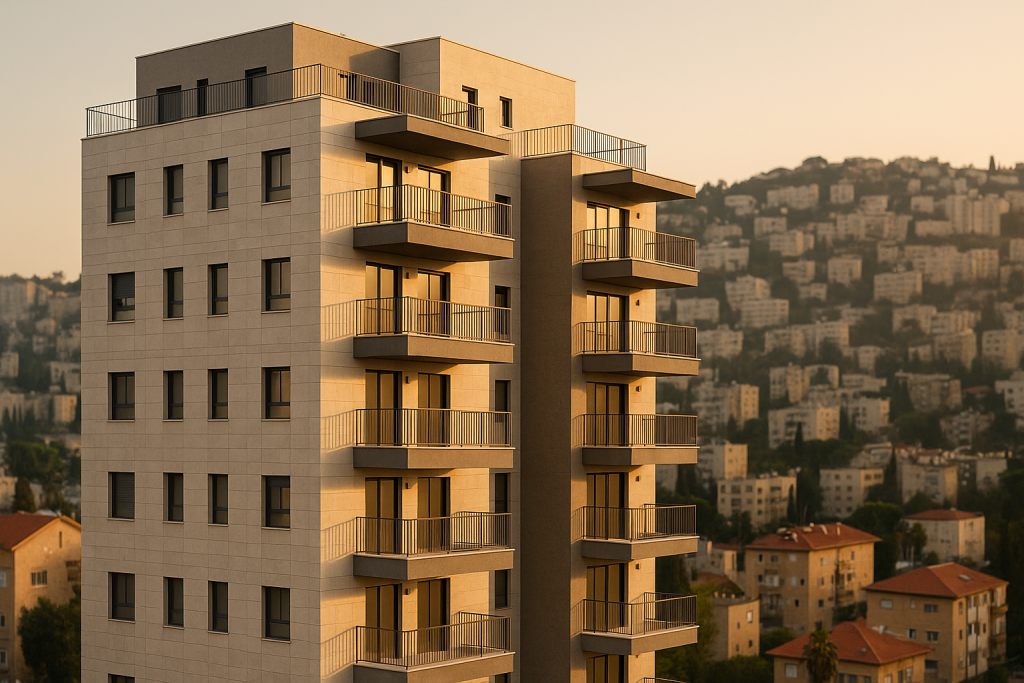
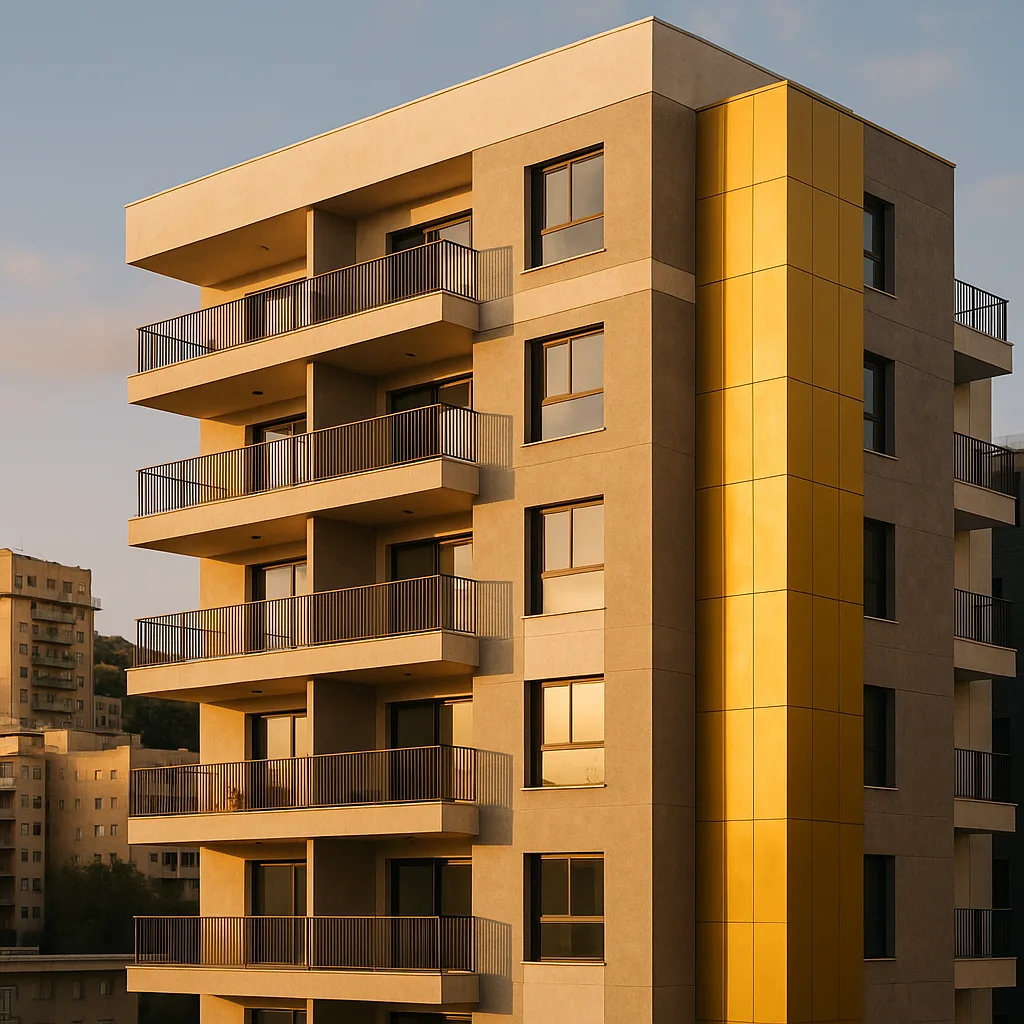
The real estate market in the capital of the north is undergoing a positive shake-up. The term urban renewal in Haifa is taking on an entirely new meaning in 2026. Whereas residents and developers once relied on the national TAMA 38, today the HP/2666 plan is the main player on the field. The plan, which has received final approval and is being implemented on the ground, redefines building rights. It also provides planning certainty that did not exist before. In this guide, we dive deep into the changes, understand how they affect the value of your apartment and examine where the biggest opportunities in the city lie.
Table of Contents
- What Is the HP/2666 Plan and How Is It Changing the Face of Haifa?
- The Difference Between TAMA 38 and the HP/2666 Plan, What Changed in 2026?
- The Impact of HP/2666 on Apartment Values in Haifa: Calculating Building Rights
- The HP/2666 Planning-Complex Map in Haifa: Where Is It Best to Invest?
- FAQ: How Much Additional Rights Am I Entitled to in Haifa?
- Summary
What Is the HP/2666 Plan and How Is It Changing the Face of Haifa?
The HP/2666 plan is the comprehensive urban renewal plan for Haifa that took full effect at the start of 2026. Unlike the old approach of “one-off planning” (a single building here and a building there), the new plan promotes broad complex-wide planning. The Haifa Municipality’s goal is to create a living urban fabric that includes not only new apartments but also infrastructure, public buildings and green parks.
According to Haifa Urban Renewal Administration data, the plan divides the city into different planning zones. Clear rules have been set for each zone. For example:
- The coastal neighborhoods, an emphasis on Evacuation-Construction and improving access to the sea.
- Hadar HaCarmel, architectural preservation alongside controlled building additions.
- The Carmel Ridge, densification and high-density construction while preserving the neighborhood’s character.
The move to the HP/2666 plan allows developers to significantly shorten permit-issuance times, as long as they meet the plan’s threshold conditions. For you, the apartment owners, this means less waiting and greater confidence in the process.
The Difference Between TAMA 38 and the HP/2666 Plan: What Changed in 2026?
Many people ask what became of the familiar TAMA 38. In 2026, TAMA 38 is no longer relevant in Haifa in its old form. Its place has been taken by the “Building-Renewal Plan” based on HP/2666. The most fundamental difference lies in certainty. In the past, the local committee could reject TAMA requests for various reasons. Today, Haifa urban renewal building rights for 2026 are anchored in a binding statutory plan.
The TAMA 38 Alternative and the Shift to a Building-Renewal Plan
As part of Haifa’s urban renewal, the municipality adopted the “Shaked Alternative” and embedded it within HP/2666. This means that demolition-and-rebuild becomes the preferred track over reinforcing existing buildings. The building-renewal plan specifies exactly how many floors can be added on each street, which prevents unnecessary legal battles between neighbors and developers.
In addition, the plan emphasizes the “housing-unit multiplier”, the metric that determines how many new apartments can be built in place of each existing one. In the Haifa of 2026, the multipliers were tailored to the economic needs of each neighborhood to ensure project viability.
The Impact of HP/2666 on Apartment Values in Haifa: Calculating Building Rights
How do the HP/2666 plan’s building rights in Haifa affect your pocket? The answer is directly tied to the appreciation potential. When a property is included in an Evacuation-Construction complex or a building-renewal plan, its open-market value rises immediately, even before the first bulldozer reaches the site. Many investors today are seeking older apartments in neighborhoods such as Kiryat Eliezer or Neve Sha’anan, understanding that the new rights will boost the property’s value by tens of percent.
The Housing-Unit Multiplier and Building Percentages by Neighborhood
The key to understanding profitability lies in the multiplier. According to the Government Authority for Urban Renewal, multipliers in Haifa generally range between 2.8 and 4.
| Neighborhood | Estimated multiplier | Common project type |
|---|---|---|
| Kiryat Eliezer | 3.5 – 4.0 | Complex-wide Evacuation-Construction |
| Neve Sha’anan | 3.0 – 3.5 | Building-renewal plan (demolition and construction) |
| French Carmel | 2.5 – 3.0 | Densification and high-density construction |
The higher the multiplier, the more the developer can offer residents in return, such as a larger balcony, underground parking and a storage room. It is worth running an early project viability check to understand the precise potential of your property.
The HP/2666 Planning-Complex Map in Haifa: Where Is It Best to Invest?
The HP/2666 planning-complex map for Haifa is the most important tool for property owners and investors. The map divides the city into 10 main planning complexes. Each complex includes different design and planning guidelines. For example, in the Lower City complex there is a preference for mixed use (residential and commercial), whereas in the ridge complexes the emphasis is on preserving the views of the landscape.
The Haifa Urban Renewal Administration and Betterment Levies
One of the big obstacles in the past was uncertainty over betterment levies. As part of implementing HP/2666, the municipality published a clear policy on betterment-levy exemptions in certain Evacuation-Construction complexes, in order to encourage developers to enter disadvantaged neighborhoods. The Urban Renewal Administration operates as a “one-stop-shop” for residents, providing initial legal and planning guidance.
In addition, it is important to understand the impact of HP/2666 on apartment values in Haifa in the context of the tax track. Projects declared under the “tax track” enjoy significant exemptions, which makes it easier to close deals with developers.
FAQ: How Much Additional Rights Am I Entitled to in Haifa?
What is the customary added floor area in demolition-and-rebuild?
According to the latest Haifa urban renewal policy for 2026, the standard addition to an existing apartment ranges between 12 and 25 square meters, subject to the plot’s planning constraints. In addition, every apartment will receive a safe room (mamad), a sun balcony and parking.
Can you carry out TAMA 38/1 (reinforcement) in 2026?
The original TAMA 38 expired in October 2023, so its reinforcement track is no longer an active route for new projects. The Haifa Municipality now advances demolition-and-rebuild tracks under the building-renewal plan (the Shaked Alternative), since they allow deeper infrastructure renewal and better protection against earthquakes and missiles.
How do I know if my building is in a renewal complex?
You can check this in the Haifa Municipality’s GIS system or contact Ahuza for an initial consultation to review the rights status of your property.
Summary
The year 2026 marks the golden age of urban renewal in Haifa. Thanks to the HP/2666 plan, the city now offers a clearer, safer and more profitable path than ever for residents and developers alike. The shift from one-off to complex-wide planning, the regulation of betterment levies and the precise definition of building rights make Haifa the number-one destination for smart real estate investment in Israel.
Do not get left behind while your neighborhood transforms. Ahuza’s experts are here to help you maximize your rights and guide you through the complex process with the authorities and developers.
Want to know what your apartment is really worth?
Contact Ahuza’s experts today for a no-obligation consultation and check your property’s renewal potential under the HP/2666 plan.
Additional source: Ministry of Housing, Urban Renewal
For deeper reading on the subject, we also recommend our guide on tenant rights by street.
More articles you might find interesting
Looking for a Smart Real Estate Investment in Haifa?
The Ahuza team guides investors through every stage of the investment process, from search to key handover.
Talk to UsFrequently Asked Questions
What is the HP/2666 plan in Haifa?
How does the HP/2666 plan affect my building?
How much can the HP/2666 plan raise my apartment’s value?
Last updated: April 2026